What is Coptic Cairo?
Coptic Cairo is one of the oldest parts of the city and the historical centre of Egypt’s Christian community.
Hidden behind the remains of the ancient Babylon Fortress, this small neighbourhood is home to some of the country’s oldest churches, peaceful courtyards and narrow pedestrian streets that feel surprisingly calm compared with the rest of Cairo.
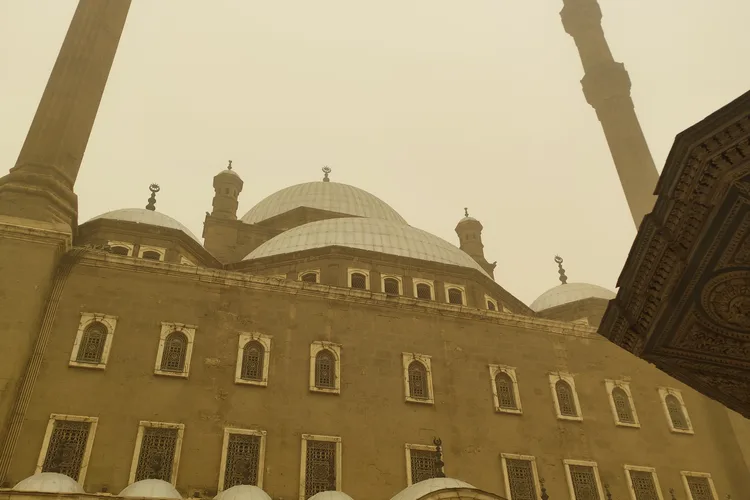
Unlike Islamic Cairo, where impressive mosques dominate the skyline, Coptic Cairo is much smaller and easier to explore on foot.
The atmosphere is also very different.
Instead of busy bazaars and constant traffic, you’ll find quiet churches, shaded alleys and visitors moving at a much slower pace.
One of the best things about Coptic Cairo is that the area itself is completely free to enter.
You can simply walk around, explore the churches and enjoy the neighbourhood without buying a ticket.
Is Coptic Cairo worth visiting?
Yes — but only if you’ve already seen Cairo’s highlights.
I wouldn’t recommend making Coptic Cairo your first introduction to the city.
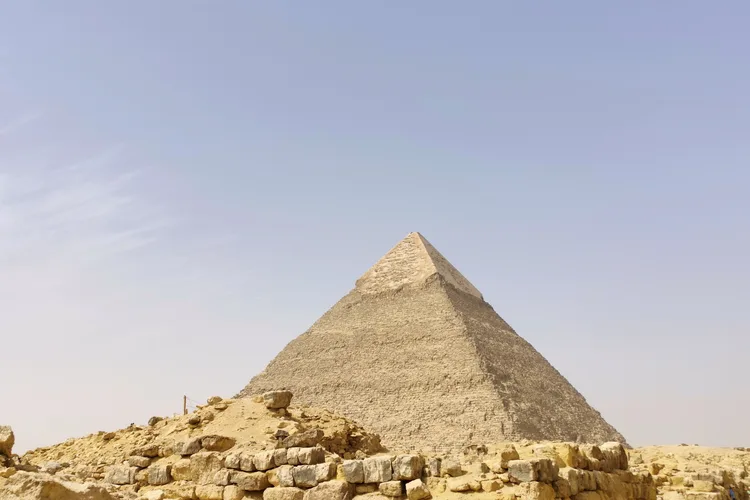
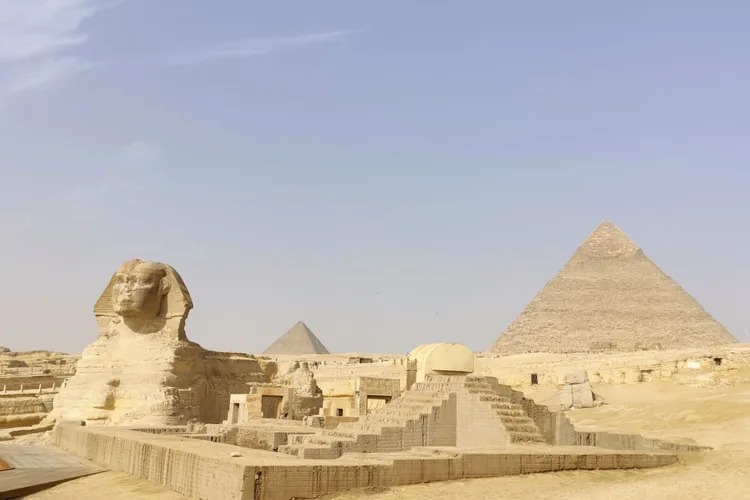
The Pyramids of Giza and Islamic Cairo are simply more unique and leave a much stronger first impression.
However, once you’ve already visited those places, Coptic Cairo becomes one of the most enjoyable half-day trips in the city.
It’s quieter. Less chaotic. And it offers a completely different perspective on Egypt’s history.
Rather than focusing on the pharaohs or Islamic dynasties, this is where you’ll discover the country’s Christian heritage, which has existed for almost two thousand years.
If you enjoy architecture, history or simply walking through places with a slower atmosphere, I think it’s well worth adding to your Cairo itinerary.
What is worth seeing in Coptic Cairo?
One of the things I liked most about Coptic Cairo is that it doesn’t feel like a checklist of monuments.
The neighbourhood works best when you simply walk around and let yourself discover its churches, courtyards and small streets.
Almost every church is free to enter, so there’s no pressure to decide whether something is worth paying for.
Hanging Church
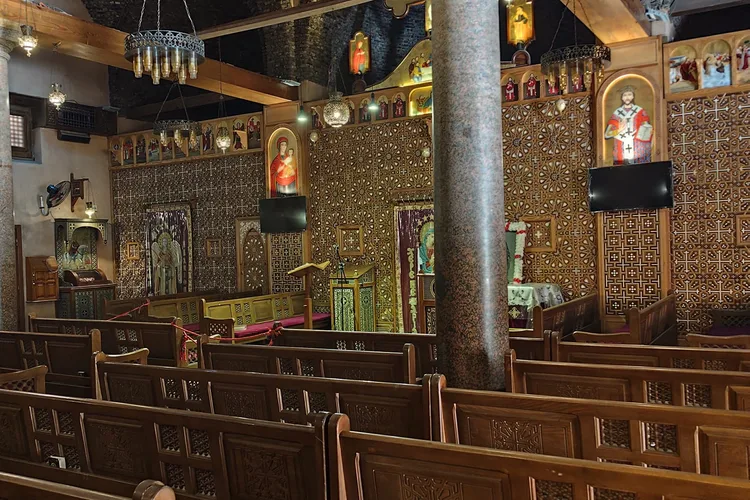
The Hanging Church is probably the most famous church in Coptic Cairo.
Built above the ancient Roman fortress, it gets its name because part of the structure is suspended over one of the old gatehouses.
Inside, the atmosphere is simple but beautiful.
Wooden ceilings, marble columns and dozens of icons make it one of the most recognisable churches in Egypt.
Even if you’re not particularly interested in religious architecture, it’s worth stepping inside.
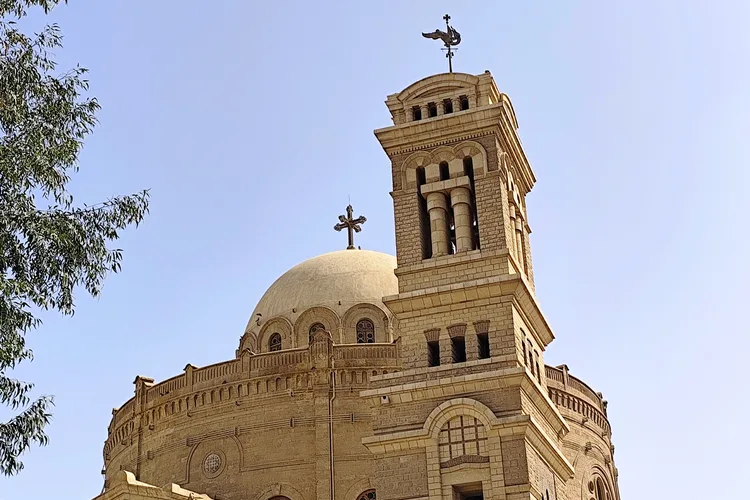
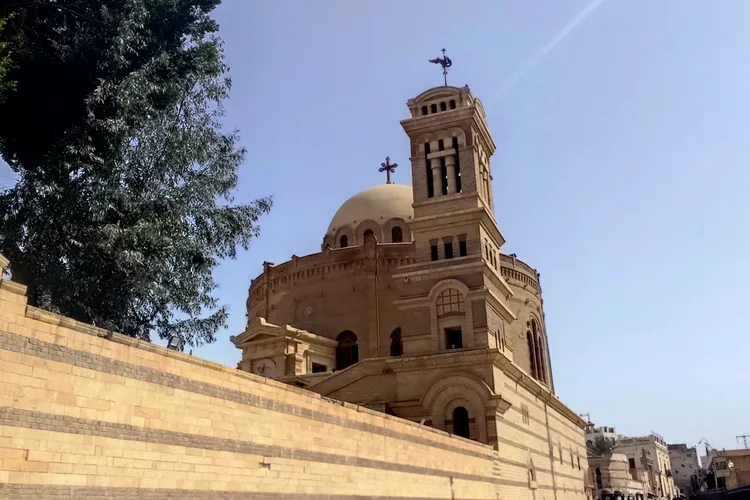
Church of Saint George
The Church of Saint George is another highlight of the neighbourhood.
Unlike most churches in Coptic Cairo, its circular design immediately catches your attention.
The current building is relatively modern compared with some of the other churches, but it’s still one of the most important places of worship for the Greek Orthodox community in Egypt.
Because it’s still an active church, remember to behave respectfully while visiting.
Church of Saints Sergius and Bacchus
If there’s one church you shouldn’t miss, I’d choose this one.
According to Christian tradition, the Holy Family stayed here during their flight into Egypt.
Whether you visit for its religious importance or simply out of curiosity, it remains one of the most significant churches in the country.
The church itself isn’t particularly grand.
In fact, it’s surprisingly modest.
But knowing the story behind it makes the visit much more meaningful.
You’ll also notice many visitors stopping to write small prayers and wishes before continuing their walk around the complex.
It’s one of those small details that gives Coptic Cairo a much more personal atmosphere than many of Cairo’s larger tourist attractions.
Babylon Fortress
Before Christianity arrived in Egypt, this area was already important.
The remains of the Babylon Fortress, built by the Romans almost two thousand years ago, are still visible throughout the neighbourhood.
Although only sections of the original walls survive today, they help explain why so many churches were later built in this part of Cairo.
As you walk between the churches, you’ll constantly come across pieces of Roman architecture mixed with later Christian buildings.
It’s this combination of different historical periods that makes Coptic Cairo feel so unique.
Wander around the neighbourhood
Don’t spend your entire visit moving from one church to another.
Take time to simply walk around.
The narrow streets are full of small courtyards, local cafés, tiny souvenir shops and peaceful corners where you can escape Cairo’s traffic for a while.
Compared with Khan el Khalili, shopping here feels much less aggressive.
The atmosphere is calmer, and the focus is much more on the neighbourhood itself than on buying souvenirs.
That’s exactly why I enjoyed it.
Is the Coptic Museum worth visiting?
This is probably the only place in Coptic Cairo where I’d lower my recommendation slightly.
The Coptic Museum has an impressive collection of manuscripts, icons, textiles and religious artefacts, and the entrance ticket is very inexpensive.
However, I don’t think it’s essential.
The museum isn’t particularly large, many exhibits have limited explanations and, unlike other museums in Cairo, there aren’t guided tours that really help bring the collection to life.
Personally, I found walking through the churches much more interesting than spending time inside the museum.
If you’re especially interested in Christian history or religious art, you’ll probably enjoy it.
Otherwise, I’d use that extra hour somewhere else in Cairo.
Where to have lunch in Coptic Cairo
By the time you’ve finished exploring the churches, you’ll probably be ready for lunch.
Rather than leaving the area immediately, I’d recommend eating inside Coptic Cairo.
One of the best options is Old Cairo Restaurant & Coffee. It serves traditional Egyptian dishes in a pleasant setting and is one of the most popular places to eat in the neighbourhood.
Because it’s well known among both locals and visitors, it can get very busy, especially around lunchtime.
If you’re travelling as a group, I’d recommend stopping by earlier in the morning to reserve a table. Even for two people, it’s worth asking if they can keep a table for you, particularly during weekends and holidays.
One thing to keep in mind is that card payments aren’t always accepted.
Fortunately, there’s an ATM inside the Coptic Cairo complex, so getting cash isn’t usually a problem if you need it.
Continue your day at the National Museum of Egyptian Civilization
At first, this combination might seem a little strange.
After spending the morning exploring Christian churches, why visit another museum dedicated to Ancient Egypt?
Simply because it works surprisingly well.
The National Museum of Egyptian Civilization (NMEC) is only a short drive from Coptic Cairo, making it one of the easiest attractions to combine with the neighbourhood.
You could even walk there in around 25 to 30 minutes, but unless the weather is particularly pleasant, I’d recommend taking an Uber instead.
The ride is inexpensive and saves you walking through busy roads, especially during Cairo’s hotter months.
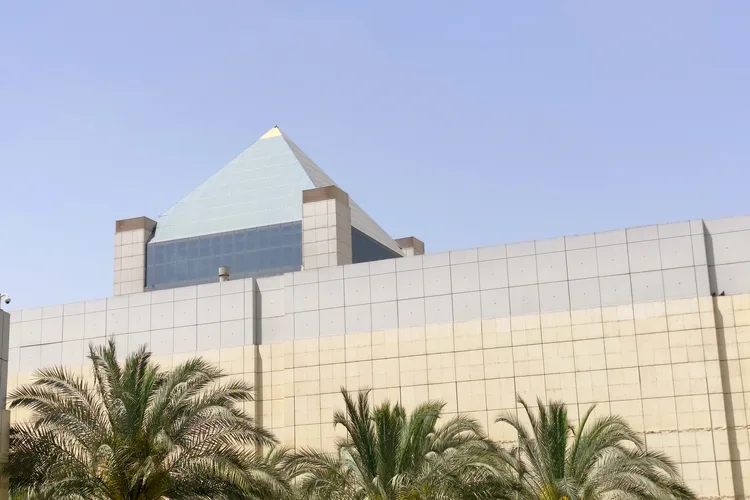
Is the National Museum of Egyptian Civilization worth visiting?
Absolutely.
If you’ve already visited the Grand Egyptian Museum, you might wonder whether another museum is really necessary.
I think it is.
The two museums complement each other rather than compete.
While the Grand Egyptian Museum focuses on the splendour of Ancient Egypt and the treasures of Tutankhamun, the National Museum of Egyptian Civilization tells the broader story of Egyptian history, from prehistoric times to the modern era.
But there’s one reason almost everyone comes here.
The Royal Mummies Hall.
This is where you’ll find some of Egypt’s most famous pharaohs, carefully displayed in one of the museum’s most impressive galleries.
Seeing the preserved remains of rulers like Ramesses II, Seti I and Hatshepsut is a completely different experience from looking at statues or sarcophagi.
It brings Ancient Egypt much closer to reality.
For me, that’s enough to justify the visit.
As far as I know, this is also the only museum in Cairo where you can see the royal mummies themselves. If visiting them is on your Egypt bucket list, this is the place to do it before heading south to Luxor.
Plan to spend around two hours here.
The museum isn’t overwhelming in size, making it easy to visit even after a full morning in Coptic Cairo.
Optional stop: Amr Ibn al-As Mosque
If you finish Coptic Cairo earlier than expected and still have some energy left, there’s one final place I’d recommend.
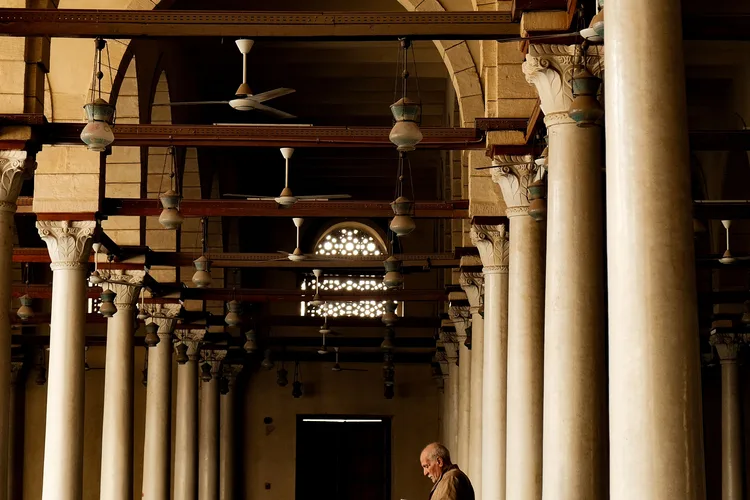
The Amr Ibn al-As Mosque.
It’s only a short distance from Coptic Cairo but receives far fewer visitors than the famous mosques in Islamic Cairo.
Built in the 7th century, it’s considered the first mosque ever constructed in Africa, making it one of the most historically significant religious buildings in Egypt.
Architecturally, it’s much simpler than the Ottoman and Mamluk mosques you’ll see elsewhere in Cairo.
That’s part of its appeal.
It feels like an active place of worship rather than a monument designed for tourists.
As with every mosque, remember to remove your shoes before entering.
Women should also cover their hair, although scarves are usually available at the entrance if needed.
If you’re interested in Islamic history, it’s well worth the short detour.
If not, you won’t feel like you’ve missed an essential attraction.
Final thoughts: Is Coptic Cairo worth adding to your Cairo itinerary?
Yes.
But I wouldn’t build an entire trip around it.
Coptic Cairo works best as your third day in Cairo, once you’ve already experienced the city’s two main highlights: the Pyramids of Giza and Islamic Cairo.
That’s when it feels most rewarding.
After the crowds of Giza and the constant movement of Khan el Khalili, Coptic Cairo offers something completely different.
It’s quieter.
More relaxed.
And much easier to explore at your own pace.
The churches themselves aren’t among the most spectacular religious buildings you’ll ever visit.
What makes this neighbourhood special is the atmosphere they create together.
Walking between Roman walls, centuries-old churches and peaceful courtyards gives you a side of Cairo that many travellers never experience.
Combining the area with the National Museum of Egyptian Civilization also makes practical sense.
Although the two attractions focus on completely different periods of Egyptian history, they’re close enough to create a balanced and surprisingly enjoyable day.
If you only have one or two days in Cairo, I’d skip Coptic Cairo.
If you have three or more, I think it’s one of the city’s most underrated neighbourhoods and a rewarding way to discover another chapter of Egypt’s remarkable history.