Stop 1: Visit the Cairo Citadel
If you’re only going to visit one historical site in Islamic Cairo, make it the Cairo Citadel.
Built by Saladin in the 12th century to defend Cairo against the Crusaders, the citadel remained the political and military heart of Egypt for centuries. Today it’s one of the city’s largest historical complexes, offering panoramic views over Cairo and some of its most important Islamic monuments.
Unlike many attractions in Cairo, visiting the Citadel is surprisingly straightforward.
You can buy your tickets either online or directly at the entrance, and queues are rarely a problem. Unless you’re travelling during a major holiday, there’s little advantage to booking in advance.
Plan to spend around three to four hours here.
The complex is much bigger than many people expect, and there’s far more to see than just the famous mosque that dominates the skyline.
Should you hire a guide at the Cairo Citadel?
Yes.
The Citadel is one of those places where a guide makes a huge difference.
Without one, you’ll visit a beautiful mosque, walk around a few courtyards and probably leave after an hour wondering why the complex is considered so important.
With a guide, you begin to understand how Cairo evolved over hundreds of years, why different rulers built different monuments inside the same fortress and how Egypt’s political history shaped the city you see today.
There are several excellent walking tours available, including free tours led by licensed local guides.
This is the tour I joined during my visit, and I would happily recommend it.
What is included with your Citadel ticket?
One thing I really liked about the Cairo Citadel is that almost everything is included in the main entrance ticket.
You don’t have to keep buying separate tickets every time you want to enter another building.
That makes visiting much more relaxed.
Mosque of Muhammad Ali
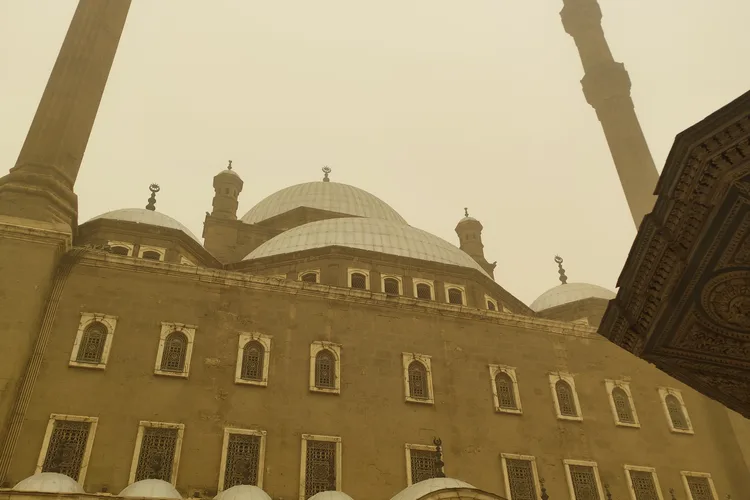
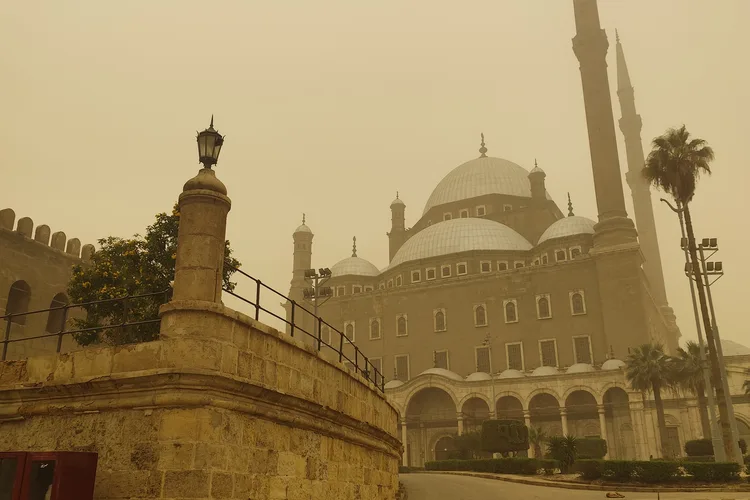
This is the landmark that almost everyone comes to see.
Often called the Alabaster Mosque, it dominates Cairo’s skyline with its enormous central dome and elegant Ottoman-style minarets.
Inside, the mosque feels bright and surprisingly peaceful despite the number of visitors.
Like every mosque in Egypt, you’ll need to remove your shoes before entering.
Because this is one of the country’s biggest tourist attractions, the dress code is generally more relaxed than in neighbourhood mosques. Women are not usually required to cover their hair here, although modest clothing is still appreciated.
The large central prayer hall is impressive, but don’t forget to walk into the courtyard as well.
From here you’ll get one of the best panoramic views over Cairo, and on a clear day you can even see the Pyramids of Giza on the horizon.
Mosque of Sultan Al-Nasir Muhammad
A few minutes away, you’ll find one of the Citadel’s oldest buildings.
The Mosque of Sultan Al-Nasir Muhammad receives only a fraction of the visitors that head straight for Muhammad Ali’s Mosque, which is a shame.
Architecturally, it feels completely different.
Instead of grand Ottoman decoration, you’ll find a much older Mamluk mosque with a large open courtyard and elegant arcades surrounding the prayer area.
Because it’s less touristy, the rules are slightly stricter.
Women are usually asked to cover their hair before entering, although scarves are often available at the entrance if you don’t have one with you.
The atmosphere here is much quieter and, personally, I found it easier to appreciate than the much busier Muhammad Ali Mosque.
Sulayman Pasha Mosque
The smallest mosque inside the Citadel is also one of its most overlooked.
Built during the Ottoman period, the Sulayman Pasha Mosque is far more intimate than the other two.
It only takes a few minutes to visit, but it’s worth stepping inside to appreciate how different Ottoman religious architecture feels compared with the earlier Mamluk style found elsewhere in the complex.
Most visitors skip it entirely.
I wouldn’t.
National Military Museum
If you’re short on time, this is probably the one part of the Citadel I’d leave until last.
That doesn’t mean it’s bad.
Quite the opposite.
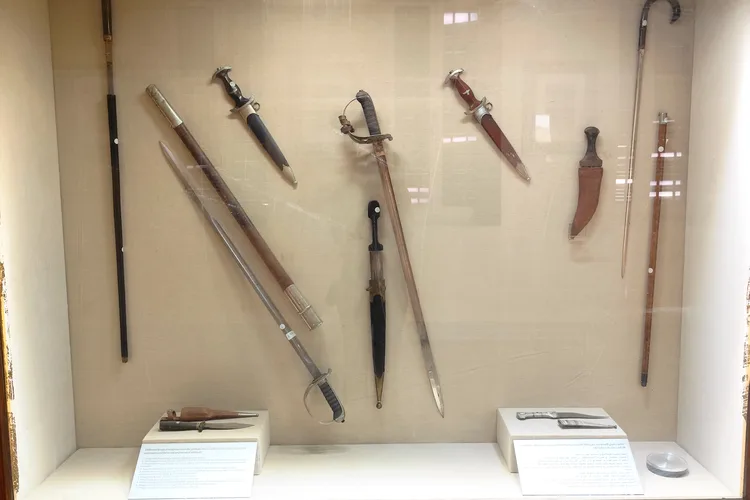
The National Military Museum gives a good overview of Egypt’s military history, displaying weapons, uniforms, vehicles and artefacts from different periods, from the monarchy to more recent conflicts.
The exhibitions aren’t particularly interactive, and there isn’t a huge amount of information in English.
If you’re visiting with a guide, you’ll get much more out of it.
The museum is also fairly small, so even a quick visit only takes around 30 minutes.
Walk around the Citadel
Don’t rush from one building to the next.
One of the nicest parts of visiting the Citadel is simply walking around the complex.
You’ll pass defensive walls, wide courtyards and open spaces that once formed the political centre of Egypt.
There is even an open-air theatre that still hosts cultural performances and events throughout the year. Depending on when you visit, you may see staff preparing the stage or setting up seating for an upcoming performance.
It doesn’t interfere with the visit at all and gives the complex a surprisingly lived-in atmosphere.
Should you visit the Sultan Hassan and Al-Rifa’i Mosques?
Once you leave the Citadel, you’ll notice two enormous mosques standing almost directly opposite the entrance.
Many visitors simply photograph them from outside.
I think they’re worth entering — but only if you’re genuinely interested in Islamic architecture.
The Mosque-Madrasa of Sultan Hassan is one of the masterpieces of Mamluk architecture and one of the largest historic mosques in Cairo. Its scale is extraordinary, especially once you step into the central courtyard.
Right next door stands the Al-Rifa’i Mosque, built several centuries later. It’s smaller, more refined and serves as the burial place of several members of Egypt’s royal family.
The entrance ticket is inexpensive, making it an easy addition to your itinerary.
That said, if you’ve already visited several mosques during your trip — or if Islamic architecture isn’t a major interest — I don’t think these are essential.
The Citadel already gives you an excellent overview, and these two mosques, while beautiful, don’t completely change the experience.
Sometimes, skipping a good attraction gives you more time to enjoy the great ones.
Optional stop: Mosque of Ibn Tulun
If you still have time after visiting the Citadel, I would make one small detour before heading towards the Museum of Islamic Art.
Visit the Mosque of Ibn Tulun.
It isn’t one of Cairo’s most famous attractions, which is precisely why I liked it so much.
Built in the 9th century, it’s the oldest mosque in Cairo that has largely survived in its original form. Unlike many other mosques in the city, it feels remarkably authentic. The architecture is simple, almost fortress-like, with thick brick walls, wide courtyards and very little decoration.
It doesn’t try to impress you with gold, marble or enormous chandeliers.
Instead, it gives you a glimpse of what early Islamic architecture looked like before centuries of embellishment transformed many of Cairo’s later mosques.
It’s also much quieter than the Citadel.
If you’re interested in architecture or photography, I think it’s absolutely worth the short detour.
If you’re already starting to feel you’ve seen enough mosques for one day, this is the easiest stop to skip.
Stop 2: Visit the Museum of Islamic Art
By this point you’ve already spent the morning walking through some of Cairo’s most important Islamic monuments.
The Museum of Islamic Art helps you understand what you’ve just seen.
Instead of looking at buildings, you’ll now discover the objects that once filled them.
The museum houses one of the world’s finest collections of Islamic art, including wood carvings, ceramics, metalwork, carpets, manuscripts, jewellery and beautifully decorated Qur’ans collected from across the Islamic world.
It’s surprisingly affordable, rarely crowded and easy to visit in around an hour.
One thing to remember is that the museum usually closes earlier than many other attractions in Cairo.
If you spend too long at the Citadel or stop at every mosque along the way, you may arrive after the last admission.
I’d recommend checking the official opening hours before planning your day.
Is the Museum of Islamic Art worth visiting?
I think it depends on the type of traveller you are.
If museums aren’t really your thing, you can skip it without feeling that you’ve missed one of Cairo’s essential attractions.
However, if you enjoy understanding the places you visit, I think it’s one of the best museums in Cairo.
Throughout the morning you’ve seen mosques, calligraphy, geometric decoration and architectural details.
The museum explains where many of those artistic traditions came from and how they evolved over hundreds of years.
For me, it made the entire day feel much more complete.
Where to have lunch
One advantage of visiting the museum before Khan el Khalili is that lunch becomes much easier.
The area around the museum has plenty of local restaurants that are noticeably less touristy than those inside the bazaar.
Prices are lower, the atmosphere is more relaxed and you’ll generally find yourself eating alongside locals rather than tour groups.
I’d have lunch here before continuing towards Khan el Khalili.
Stop 3: Explore Khan el Khalili
No visit to Islamic Cairo feels complete without walking through Khan el Khalili.
For centuries, this maze of narrow streets has been Cairo’s most famous market, and although it’s undeniably touristy today, it’s still one of the city’s most atmospheric neighbourhoods.
The best way to experience it is simply to wander.
Get lost.
Walk through the smaller alleys.
Watch craftsmen working in tiny workshops.
Stop for tea.
Listen to the calls to prayer echoing between the old buildings.
Don’t rush.
The atmosphere is the real attraction.
Is shopping at Khan el Khalili worth it?
Honestly?
Not on the main streets.
Most of the souvenirs you’ll find near the busiest entrances are heavily marked up because they’re aimed almost entirely at tourists.
If you really want to buy something, walk a little further into the market.
Even better, head upstairs whenever you find one of the indoor bazaars.
Many visitors don’t realise that several of these shopping buildings have a second floor, where prices are often significantly lower than at street level.
You’ll still need to negotiate a little, but nowhere near as aggressively.
For me, it’s simply a much more pleasant shopping experience.
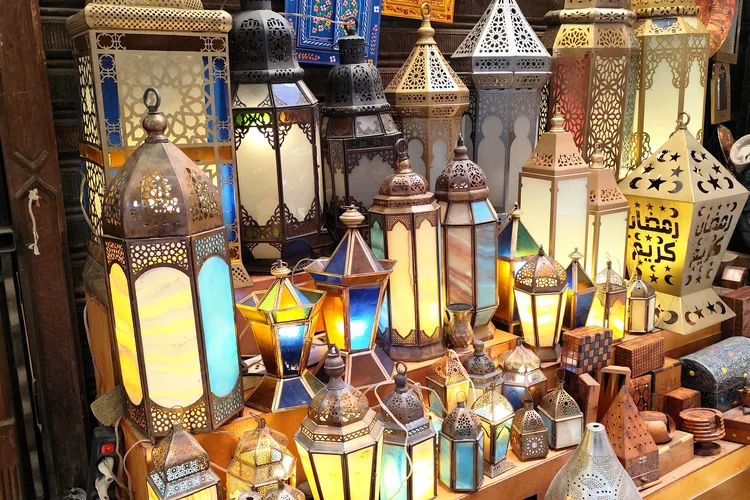
If you’re buying spices, lamps, scarves or small souvenirs, this is where I’d start looking.
Visit Al-Hakim Mosque
As you continue exploring Islamic Cairo, I also recommend stopping at the Al-Hakim Mosque.
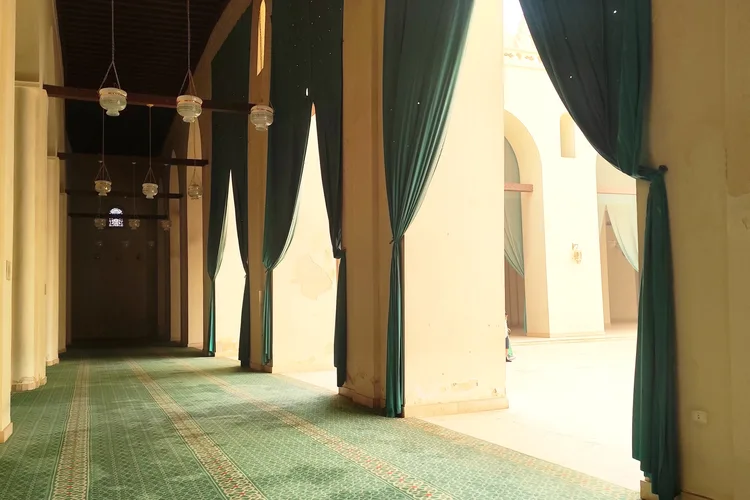
Unlike the Ottoman mosques inside the Citadel, Al-Hakim feels much more open thanks to its enormous courtyard.
Originally built during the Fatimid period over a thousand years ago, the mosque has been restored several times throughout its history, giving it a slightly different appearance from many of Cairo’s medieval monuments.
Like every active mosque, visitors should dress respectfully.
Women are generally asked to cover their hair before entering, although scarves are usually available at the entrance if needed.
Shoes must also be removed before stepping inside.
It’s a peaceful place and a welcome escape from the busy streets outside.
Where to have dinner in Khan el Khalili
By the time you’ve finished exploring the market, it’s usually the perfect moment to sit down for dinner.
Rather than leaving the area immediately, I’d recommend staying for the evening.
Khan el Khalili becomes particularly atmospheric after sunset, when the cafés fill up and the streets remain lively long after most historical attractions have closed.
Two restaurants that I think strike a good balance between quality, atmosphere and price are Zeeyara Restaurant and Naguib Mahfouz Café & Restaurant.
Neither is particularly cheap by Egyptian standards.
But both serve well-prepared Egyptian food in beautiful surroundings without feeling like tourist traps.
If you’re only having one dinner in Islamic Cairo, I think either would be a good choice.
Final thoughts: Is one day enough for Islamic Cairo?
Yes.
But only if you focus on the places that genuinely add something different to your trip.
Many visitors spend an entire day rushing between every historic mosque in Cairo.
Personally, I don’t think that’s necessary.
Instead, I’d build the day around the Citadel, the Museum of Islamic Art and Khan el Khalili, adding places like Ibn Tulun, Sultan Hassan or Al-Hakim Mosque only if they match your interests or if you have extra time.
That’s what makes Islamic Cairo so enjoyable.
It isn’t about ticking off monuments.
It’s about slowing down.
Walking through neighbourhoods that have been inhabited for centuries.
Listening to the call to prayer echo between medieval buildings.
Watching daily life continue around monuments that many cities would treat as museums.
The Pyramids of Giza tell the story of Ancient Egypt.
Islamic Cairo tells the story of the city that Egypt eventually became.
If you have at least three days in Cairo, I wouldn’t hesitate to dedicate one of them entirely to this side of the capital.