Day 1: Grand Mosque & Royal Opera House Muscat
Start with Sultan Qaboos Grand Mosque (go early)
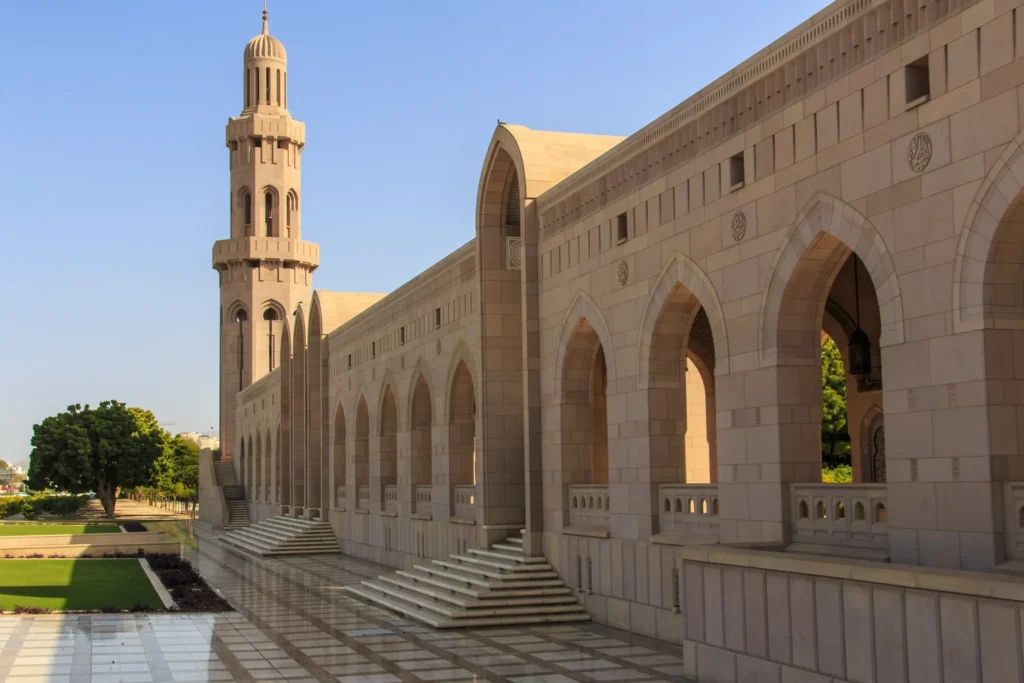
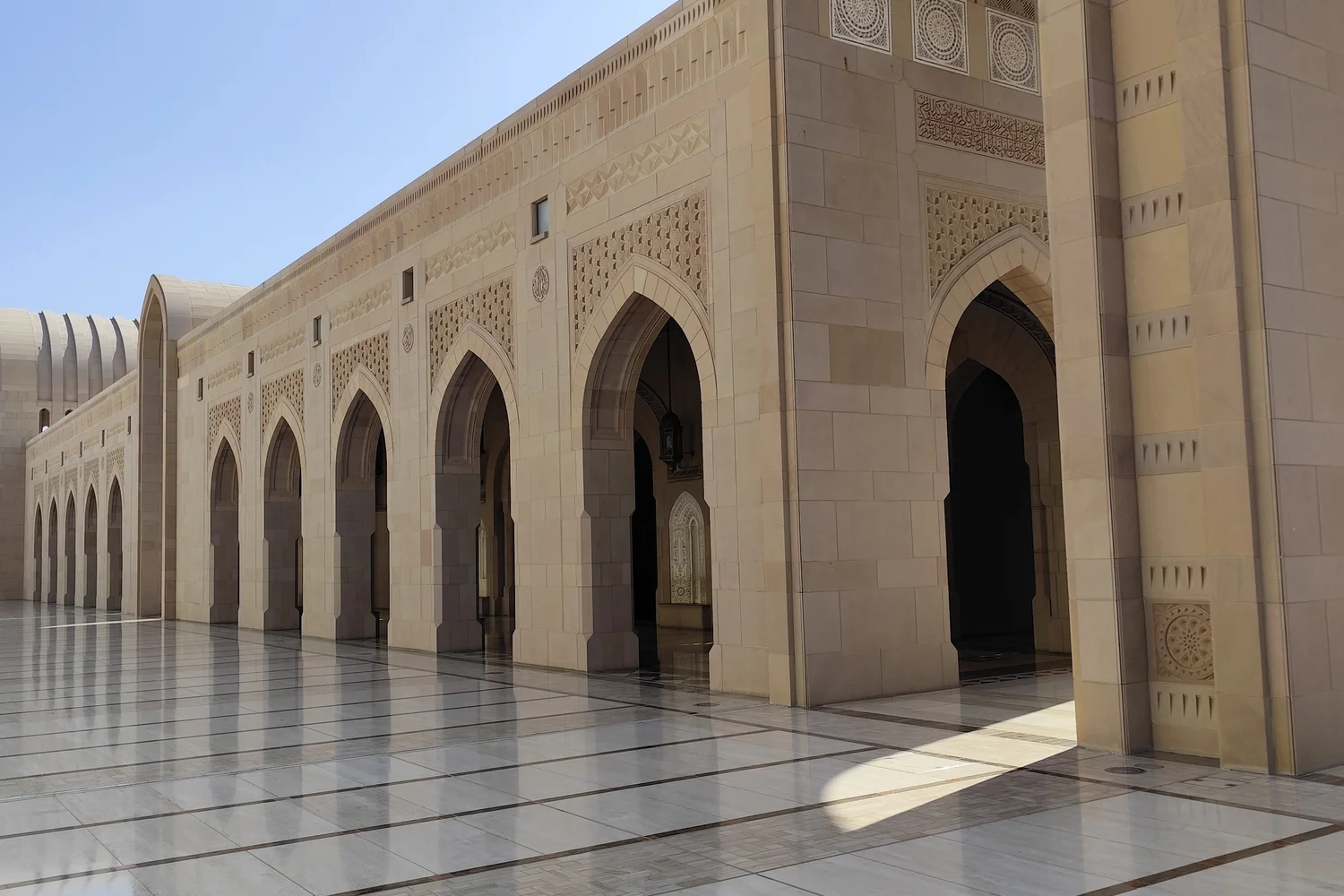
The Sultan Qaboos Grand Mosque is the one sight you should not miss. It is also the one sight with a real constraint: visitor access to the interior prayer halls is limited and ends mid-morning on most days, because the spaces close for worship. Check the official visitor information before you go.
Dress code is not flexible here. Plan for modest, loose clothing that covers arms and legs. Women need a headscarf to cover hair. If you arrive unprepared, there is typically a shop at the entrance where you can get appropriate clothing, but it is better to avoid losing time fixing a preventable problem.
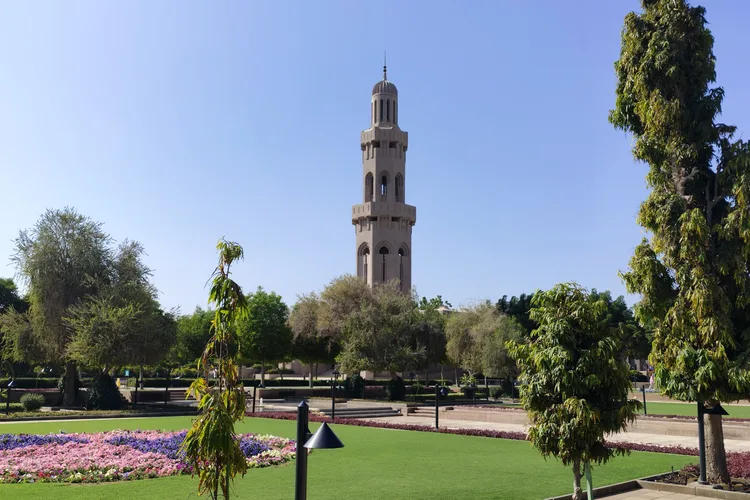
After you finish the interior visit, do not leave straight away. Spend time outside (you can take photos and walk around the complex), and look for the volunteer / information area. This is where the experience becomes more than architecture: visitors can ask questions about the mosque, Islam, and daily life in Oman, usually with tea or coffee and dates offered in a calm, welcoming way.
Taxi to the Royal Opera House Muscat
From the mosque, take a taxi to the Royal Opera House Muscat. Muscat is not a city where you want to waste energy navigating transport for a short visit.
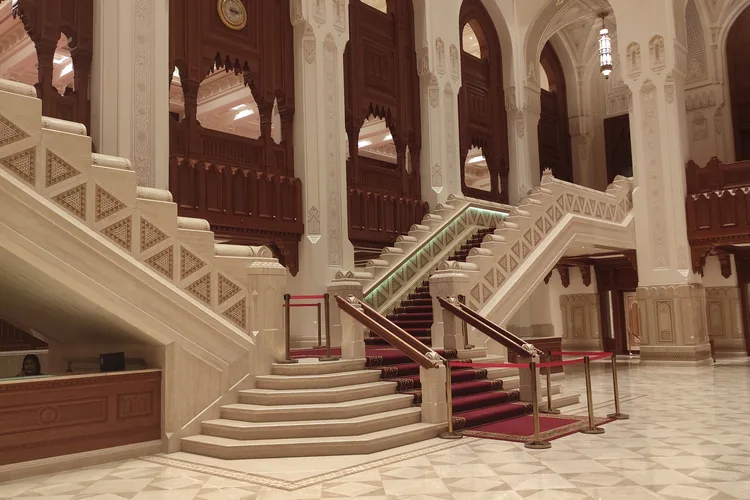
Buy a ticket and wait for a guided tour. The building is beautiful, but the guided tour is what gives it meaning: you get the context, the design choices, and the story of how Oman positions culture today.
After the tour, ask staff for directions to the extra spaces that many visitors miss: the Exhibition of Musical Arts and the Music Library. They are part of the same institution, but they are not always obvious from the main visitor flow, and you may need to walk a little to reach them.
If you have the evening free and there is a performance that night, it is worth checking the schedule. Muscat is not full of nightlife options that feel culturally “worth it,” so the opera can be an unusually strong evening plan.
Day 2: Mutrah & Old Muscat city tour
Day 2 is the more atmospheric day: sea air, market lanes, and the older official buildings of the capital.
Start at Mutrah Souq
Begin with Mutrah Souq. It is the classic stop, and it is best approached with a short shopping focus. The strongest buys for many travelers are spices, perfumes/attars, and scarves.
If you want better prices and fewer tourist games, do two things: go beyond the main corridor into side lanes, and ask about fabric composition if you are buying “silk” or “cashmere.” In busy tourist souqs, labels can be optimistic.
Lunch and a slow walk on Mutrah Corniche
After the souq, move to Mutrah Corniche. It is one of Muscat’s easiest pleasures: you walk, you sit, you eat something simple, and you let the city slow down. This is also where Muscat feels most social in the late afternoon.
Mutrah Fort (water, stairs, heat)
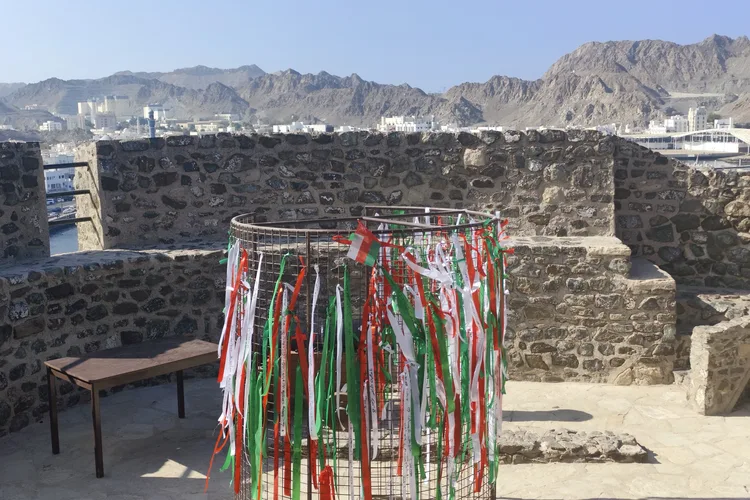
Then go up to Mutrah Fort. The view is the point, but you earn it with stairs, sun, and very little shade. Bring water and do not go up in the hottest part of the day if you can avoid it.
National Museum Oman, then walk to Al Alam Palace
In the afternoon, go to the National Museum Oman. The key planning note is simple: it does not close late, so do not leave it for the end of the day after you are tired and slow.
From there, walk to Al Alam Palace. You cannot go inside, but it is worth seeing from outside because it is visually distinctive and the surrounding official area feels very different from Mutrah’s working waterfront.
Day 3: Dolphin watching, a Muscat boat tour
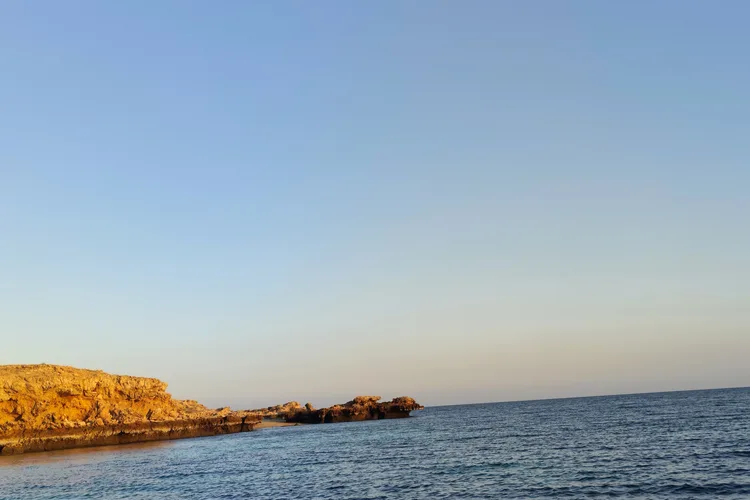
The best way to use a third day in Muscat is to get onto the water. It shows you why the city looks the way it does: mountains pressed into the coast, small coves, and a sea culture that still matters.
Where to go: Bandar Al Rowdha Marina or Sultan Qaboos Port
Two common departure points are:
- Bandar Al Rowdha Marina, a well-known base for boat operators offering dolphin watching, snorkeling, dhow cruises, and fishing.
- Sultan Qaboos Port, which is practical if you are arriving on a cruise or staying very close to the port area. Many “Muscat boat tour” providers list port pick-up options for shore excursions and dolphin trips.
If you are staying in central Muscat, Bandar Al Rowdha is usually the easiest “tourist default” because it is built around operators and departures.
Pick the right tour: dolphins only vs dolphins + snorkeling
This is the main choice, and it depends on what kind of day you want.
A shorter trip focuses on dolphin watching only. It is good if you want a light morning plan and you do not want to get wet.
A longer option combines dolphin watching with snorkeling, often stopping in bays such as Bandar Khairan, where the water can be clear and calm on the right day.
If you are sensitive to motion sickness, pick a calmer day, take medication early, and sit where you feel most stable. This is not “dangerous,” but wind and waves can make the experience less pleasant than people expect.
Dolphin tours in Muscat are popular for a reason: they are low-effort, family-friendly, and visually rewarding. They also break up the city itinerary nicely. By day 3, most travelers have seen enough buildings. The sea day gives you variety without adding long drives or complex logistics.
Bottom line
This muscat itinerary 3 days is a strong first visit to Oman’s capital: one day for the mosque and the opera (Muscat’s modern cultural core), one day for Mutrah and Old Muscat (the waterfront soul), and one day at sea for dolphin watching and optional snorkeling.
If finally you are staying longer, you can take a look to out guide to all the things you can do in Muscat