The safety picture in one paragraph
Crime levels are generally low compared with many popular destinations, and Muscat scores very well in perception-based city safety rankings (Numbeo’s 2026 data puts Muscat at a low crime index and high safety index). Official government advice from the US, UK, Canada, Australia, and Spain broadly aligns on the key point: Oman is generally calm, but travelers should be careful because of regional tensions and should avoid the Yemen border area.
Crime in Oman: what actually happens to tourists
Most visitors will not experience crime in Oman. When incidents happen, they are more likely to be petty theft (unattended bags, phones left on café tables, valuables in cars) than anything violent. Government travel advice tends to frame crime as limited, with the bigger emphasis on general awareness and legal differences rather than street danger.
If you like numbers, there are two useful ways to look at this:
- Perception/survey data: Numbeo’s country and city pages consistently rank Oman and Muscat as low-crime relative to many global cities (useful for a rough comparison, but it is not an official dataset).
- Homicide data: public datasets exist, but they are often old, unevenly updated, or hard to compare cleanly across countries. If you want a headline: Oman is not a place known for violent crime affecting tourists. (For travel decisions, the border advisory matters more than the homicide stat.)
Areas to avoid or treat differently
The Yemen border area: the one clear “no” for tourists
Multiple governments explicitly advise against travel to (or near) the Yemen border because of the conflict and the risk of spillover. The US travel advisory says not to travel to the Yemen border area due to armed conflict/terrorism risk. Canada also warns against approaching the Yemen border and describes it as potentially dangerous, including the difficulty and risk around crossings. Australia advises reconsidering travel to Yemen border areas as well. Spain’s travel recommendation similarly notes Oman is generally safe but highlights higher-risk zones, especially areas linked to the Yemen frontier.
In plain terms: if your itinerary is Muscat, Nizwa, Wahiba Sands, Sur, Jebel Akhdar, Ras al Jinz, Salalah (city), you are in the normal tourist lane. The Yemen border is not that.
“Unsafe” is sometimes about terrain, not crime
Outside cities, the bigger risk is not crime. It is remoteness. Mobile signal gaps, limited lighting at night, long distances between services, flash floods in wadis, and poorly prepared off-road driving create the kind of problems that feel like “safety incidents” even when no one is threatening you.
If you are doing wadis, hiking, or desert driving, think like you would in a remote part of southern Europe: you can be safe, but you need the basics (water, plan, daylight timing, car condition).
Places that feel very safe for tourists (and why)
Muscat (including Mutrah): calm streets and a strong “social control” vibe
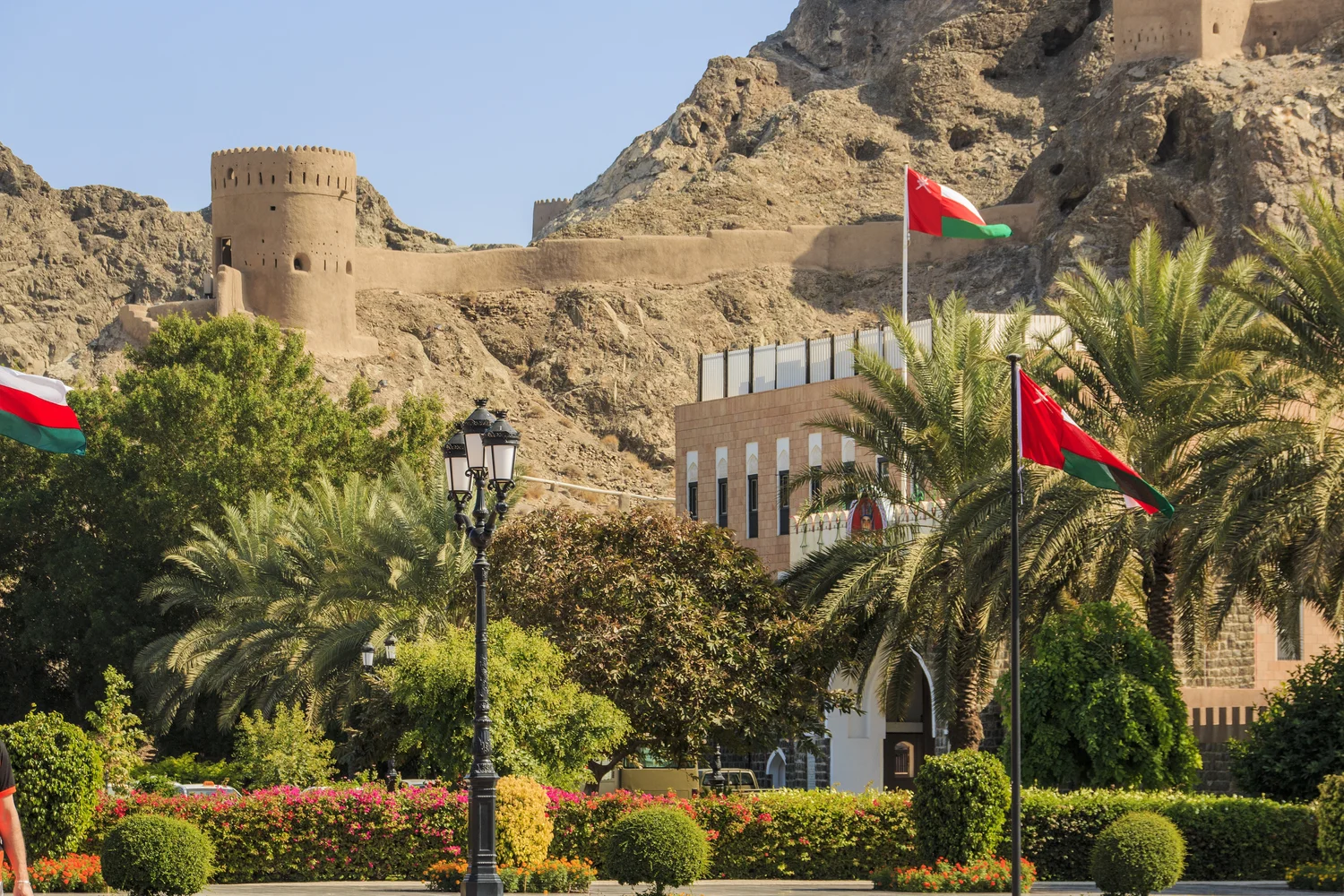
Muscat is one of those cities where the atmosphere does a lot of the work. There is a clear sense of order, and visitors usually notice how comfortable it feels to walk around, even in busy areas like Mutrah. Survey-based rankings reflect that perception, placing Muscat among low-crime cities.
Main tourist circuits: predictable, easy logistics
Most tourist routes in Oman are built around well-established stops. The risk profile here is boring (in a good way): you are not navigating unstable neighborhoods. You are mostly navigating heat, distances, and road timing.
The one thing that can catch you out: regional tensions and travel disruption
Oman is often stable internally, but it sits in a region where airspace closures, flight changes, and sudden tension spikes can happen. Australia’s updated advice is very direct about this risk: the broader regional security environment can change quickly and cause disruption even if Oman itself stays calm.
This matters most if:
- you have tight connections through nearby hubs,
- you are traveling with little flexibility,
- you are doing a multi-country trip in the region.
Taxis and getting around: what feels safe in real life
For many travelers, “Is Oman safe?” really means: can I move around without stress? In Muscat, taxis are generally straightforward. If you are alone and you want extra peace of mind, app-based rides are useful because you get trip details and a record in the app.
A practical option in Oman is OTaxi / Yango, including a female-driver service (“OFemale”). The Otaxi app listing mentions choosing an OFemale class to ride with a female driver. There is also official public messaging around female taxi services in Oman’s ride-hailing ecosystem (including airport information for female passengers). And local reporting has covered the OFemale concept as a women-driver service.
If you do not trust street pickups, use the app. If you do trust them, you will still often find the app easier for pricing and navigation.
Is Oman safe for solo female travelers?
This is where Oman stands out. Yes, Oman is generally safe for solo female travelers. Many women report feeling comfortable walking around, asking for directions, and taking taxis alone—especially in Muscat and on common tourist routes.
Two things make it easier than in many destinations:
- The social tone is respectful. You may get curiosity, but persistent harassment is not the norm.
- You have control options. If you prefer a woman driver, services linked to Otaxi/Yango include a female driver option (OFemale / female taxi).
The realistic advice is simple: dress with basic local awareness (not because you are unsafe, but because it reduces friction), avoid isolated areas late at night if you feel uneasy, and use app taxis when you want traceability.
Common-sense safety checklist that actually matters in Oman
- Do not go near the Yemen border. This is the clearest official warning.
- Take driving seriously. Distances are long, and mistakes are expensive in the desert.
- Plan nature days like nature days. Heat, flash floods, and remoteness are the real risks.
- Respect local laws and norms. Oman is calm, but it is also conservative by European standards (especially around alcohol, public behavior, and photography in sensitive contexts). Government travel pages highlight legal differences as part of safety planning.
- Keep an eye on regional news for flight disruption.
Bottom line: should safety stop you from going?
For most travelers, no. Oman is a country where safety is rarely the limiting factor. What limits people is more practical: budget, heat, and the fact that you need to plan transportation.
If you stay in the normal tourist zones, avoid the Yemen border area, and treat the outdoors with respect, Oman is one of the easiest places in the Middle East to travel confidently—especially if you like comfort, calm streets, and low daily stress.