The basics of Omani food
Oman has a long coastline, and that shapes the whole cuisine. Seafood is not a side category. It is one of the pillars of daily eating. Rice is the other. Many meals are built to feed groups, which is why shared plates and large portions are common.
If you are exploring muscat food, keep one thing in mind: Muscat is a crossroads city. Many menus mix Omani dishes with Yemeni and Indian influences. That is normal in modern Oman. It does not make the food “less Omani”. It just means you should pay attention to what you order if you want something specifically local.
Shuwa: the dish that matters most
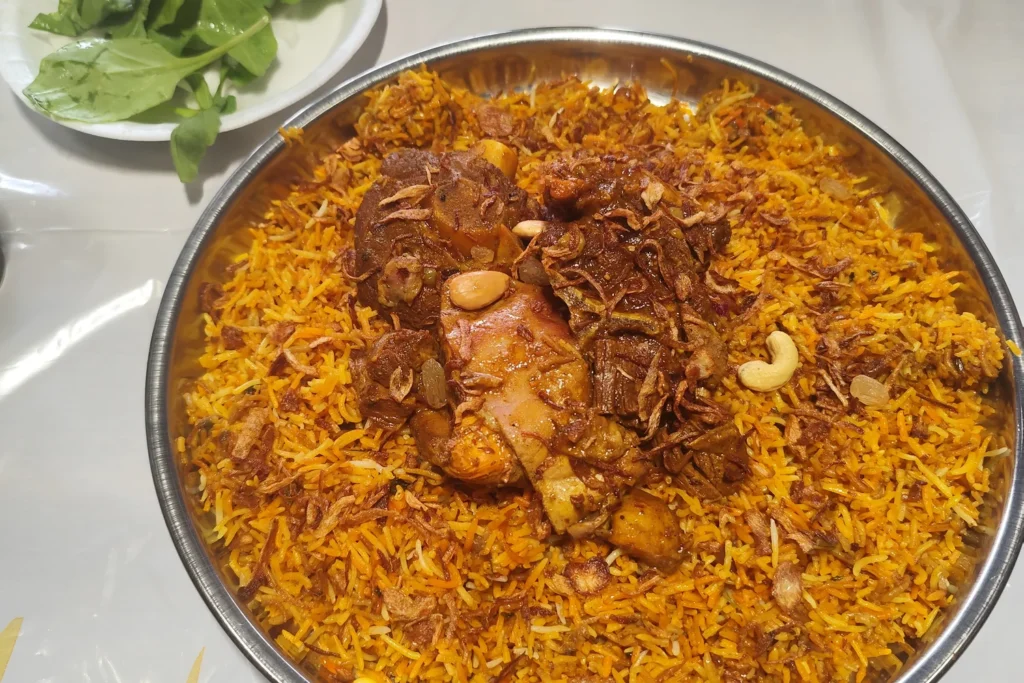
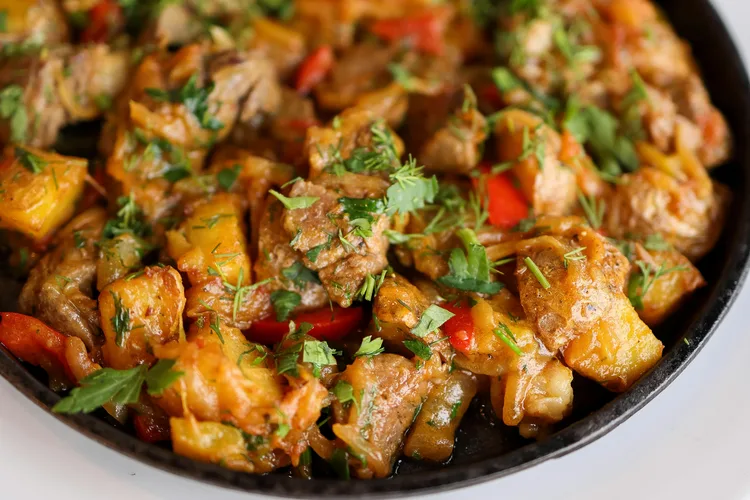
If you learn one Omani dish name, make it shuwa. This is slow-cooked meat (often lamb or goat) marinated with spices and cooked for a long time until it is deeply tender. Traditionally it is cooked in an underground pit for special occasions, so it has a “celebration food” identity.
In real travel life, you will not always find true traditional shuwa available every day. Some restaurants offer it regularly. Others offer slow-cooked meat dishes that are similar in style. If you see shuwa on the menu, it is usually worth ordering because it is one of the clearest expressions of Omani cooking.
Spiced rice dishes: what you will eat again and again
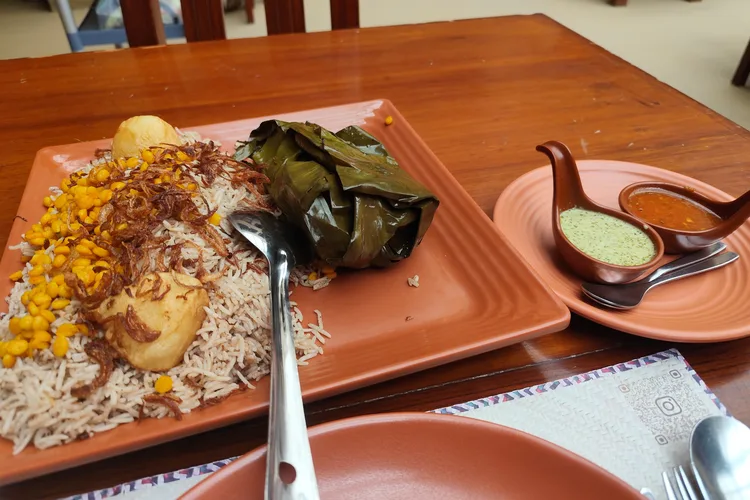
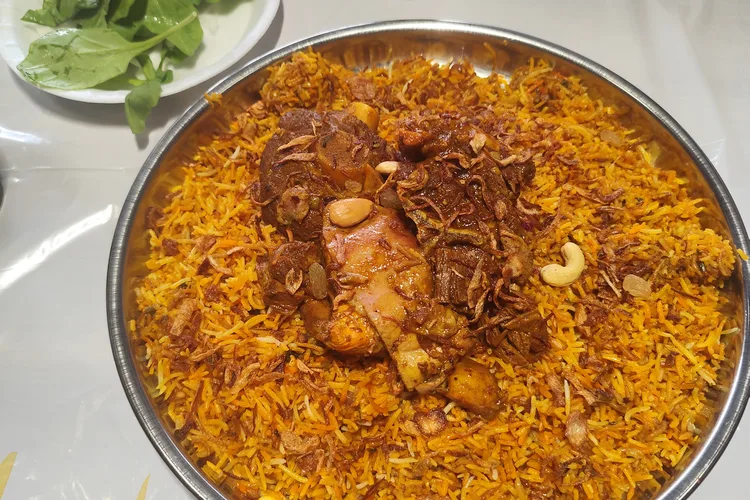
Rice is the backbone of eating in Oman. Expect spiced rice with meat, chicken, or fish in most local restaurants. The naming changes from menu to menu, but the structure is familiar: fragrant rice, a protein on top, and often a side sauce or broth.
For visitors, the main practical tip is portion control. These rice dishes are often designed for sharing. Two people can usually split one main rice dish and add a side or starter instead of ordering two separate mains.
Fish and seafood: the part you should take seriously
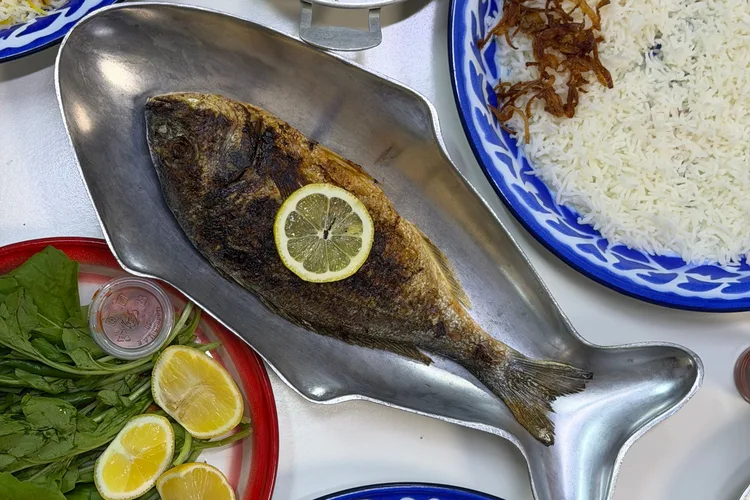
Because Oman is coastal, seafood is not reserved for expensive places. Fish is common in simple restaurants too, and when it is fresh it does not need much.
The best approach is simple: ask what fish they have that day and how it is cooked. Grilled fish with rice is one of the safest “local” orders in the country, and it often ends up being one of the best meals of a trip. If a restaurant looks basic but busy with local families, that is usually a better signal than décor.
Oman also has older traditions of curing and salting fish. That is where one of the most polarising dishes comes in.
The shark salad: traditional, but too salty for most visitors
You may see a dish made from salted shark, mixed with onion and citrus. It is part of Oman’s preserved seafood tradition, and it is culturally interesting.
But the eating experience is not for everyone. It can be extremely salty, and the texture can feel tough or chewy. For many travellers, it is a “taste once for the story” dish, not something worth spending a full meal on. If you have limited stomach space in Oman, fresh fish and well-cooked rice dishes are a better use of it.
Omani bread: thin, crisp, and different from what you expect
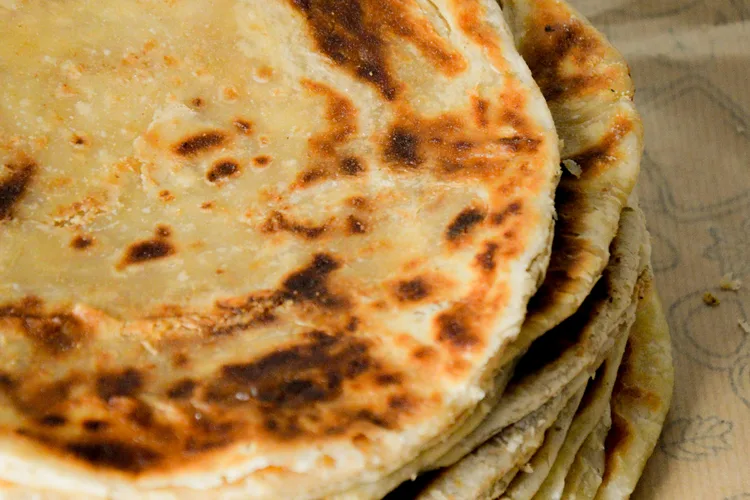
Many travellers arrive expecting Middle Eastern bread to be thick and soft like pita. Omani bread can be very different. One common style is ragag (also written raqaq): very thin, cooked fast on a hot surface, and often served folded. It can be crisp in parts, soft in others, depending on how it is served.
This matters because it changes how you eat. Ragag is not only a scoop bread. It becomes a base for toppings, a wrap, or something you tear and mix into sauces.
If you enjoy bread, try it plain first, then with a simple pairing like eggs or cheese. It is one of those foods that feels “everyday” to locals but genuinely different for most visitors.
Thareed laham: the comforting bread-and-stew dish
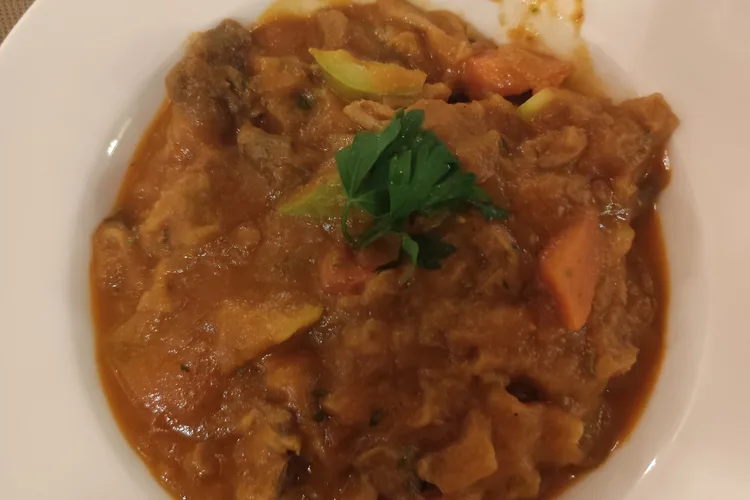
If there is one dish that explains Gulf comfort food in a single plate, it is thareed laham. Thareed is built around bread soaked in a rich broth, and laham means meat. The result is a warm, soft dish where the bread absorbs the flavour of the stew. It is not elegant. It is satisfying.
This is also a good antidote to rice overload. After a few days of spiced rice dishes, thareed laham feels like a change without leaving local food behind. It is usually served in a shareable format and eaten by tearing and scooping. If you see it on the menu, it is a smart order for travellers who want something traditional that still feels easy to enjoy.
Soups: simple, useful, and often underrated
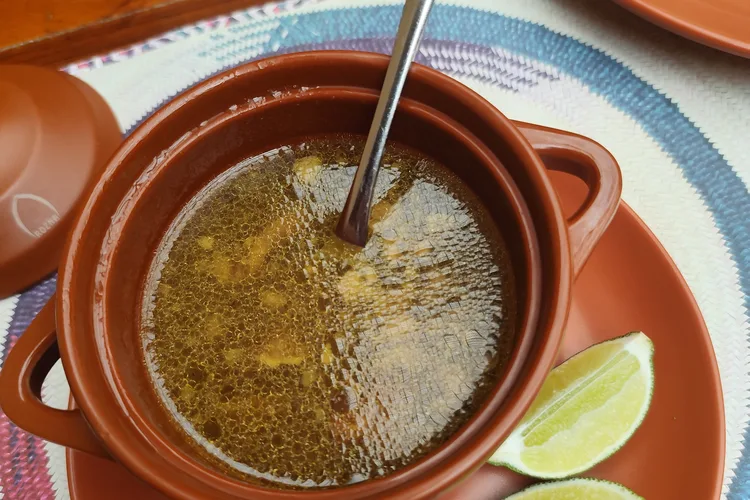
Soups in Oman tend to be straightforward: warming broths, sometimes lentil-based, sometimes meat-based. They are not usually the star of the menu, but they are a good choice when you want something lighter, especially in the evening or after a long drive day.
Soups are also a practical way to eat “local” in smaller restaurants where the main dishes are all large. One soup plus one shared main can be enough.
Camel meat: yes, try it (in the right place)
Camel meat is part of the food culture in Oman and across the region. You might find it grilled, stewed, or served in slow-cooked formats. It is worth trying at least once if you enjoy meat and want to taste something you will not eat at home.
The flavour depends heavily on cooking. When it is cooked well, camel can be rich and pleasant, and some travellers find it reminds them slightly of pork in texture and richness. When it is cooked badly, it can be dry and tough. If you are curious but cautious, the best approach is to order a camel dish to share, alongside something “safe” like fish, so you are not stuck with a full portion if it is not great.
Desserts: aromatic, sometimes disappointing, still worth one small taste
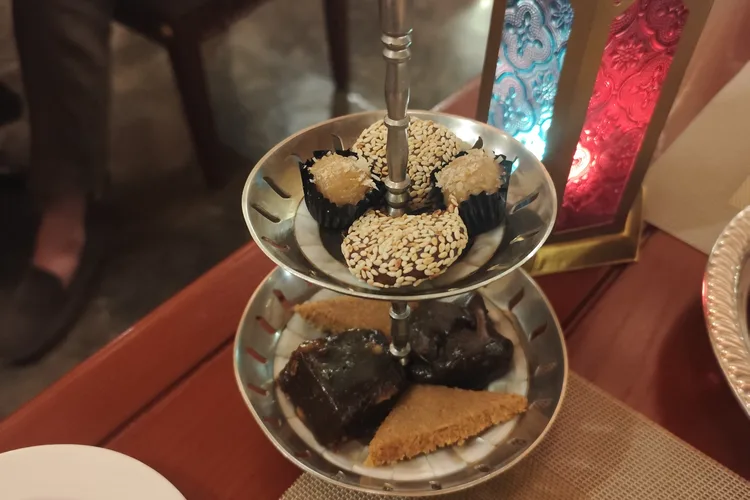
Omani desserts deserve a realistic warning. Some traditional sweets use rose water, saffron, and cardamom, and the result can feel more perfumed than dessert-like. If you love floral flavours, you might genuinely enjoy them. If you dislike rose water, you might find the flavour unpleasant.
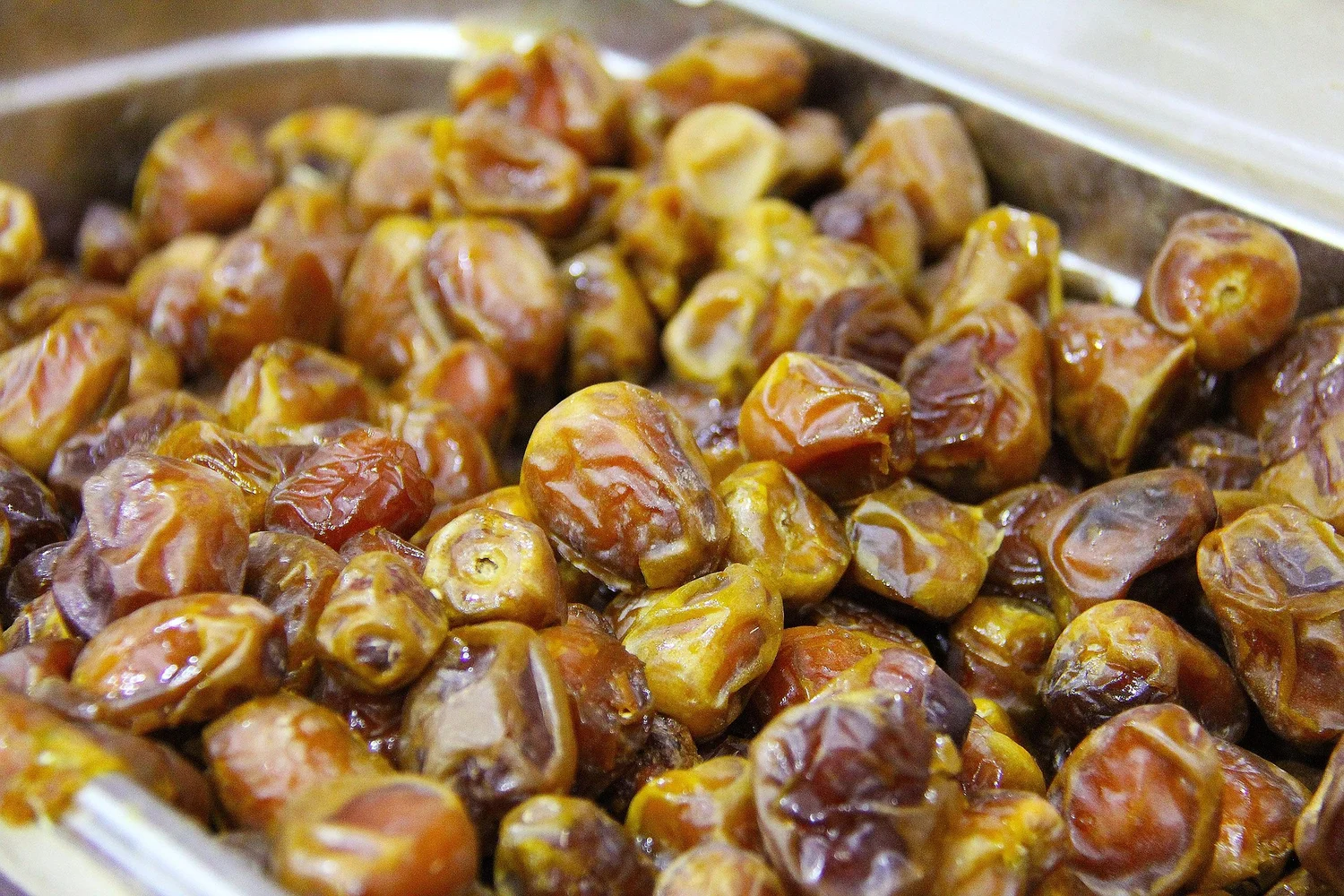
The sensible strategy is simple: taste once, in a small portion. Do not force it. In Oman, tea and dates often feel like the better ending to a meal anyway.
A small eating strategy that works in Muscat
For most travellers, the best way to explore muscat food is not to chase every dish. It is to rotate the pillars. Over a day or two, aim for one rice-based meal, one seafood meal, and one bread-based dish like thareed laham. That gives you variety without turning every meal into a heavy feast.
And let the free tea and dates do their job. It is a small detail, but it says something real about Oman: hospitality is not staged here. It is built into normal life.