1. History & Heritage
Al Masmak Fortress
Al Masmak is one of the few places in Riyadh where history feels close, not abstract. The fort is compact, easy, and worth it even if you are not a museum person. You get the story of the 1902 recapture that shaped modern Saudi Arabia, without needing to study anything in advance.
What improves this stop is the setting. Step outside and you are immediately in the older commercial core of the city. Al Safat Square is there, and the whole area has a “working Riyadh” feel that you do not get in the northern districts.
Practical detail: the Al Masmak Palace Museum is right there too. It is a small add-on with photos and simple exhibits. If you want quick context, do it. If you are short on time, the fortress alone is enough.
Souq Al Zal
Souq Al Zal is not staged. It is not designed for tourists. That is exactly why it can be interesting.
Go with a short shopping goal. The best buys are still the simple ones: oud-related scents, spices, and scarves that pack easily. If you want a souvenir that feels culturally tied to the place, a small oud oil or incense item makes sense.
Now the honest part: this is an older, local-heavy zone. Tourists are still relatively uncommon here. You might get unwanted attention, especially if you are visibly foreign or a woman walking alone. That does not mean something will happen. It usually does not. But the atmosphere can feel less “managed” than the rest of Riyadh.
Diriyah (At-Turaif District)
If you do one heritage stop in Riyadh, make it Diriyah. It is the city’s most impressive historic setting, and it is also the easiest to experience comfortably.
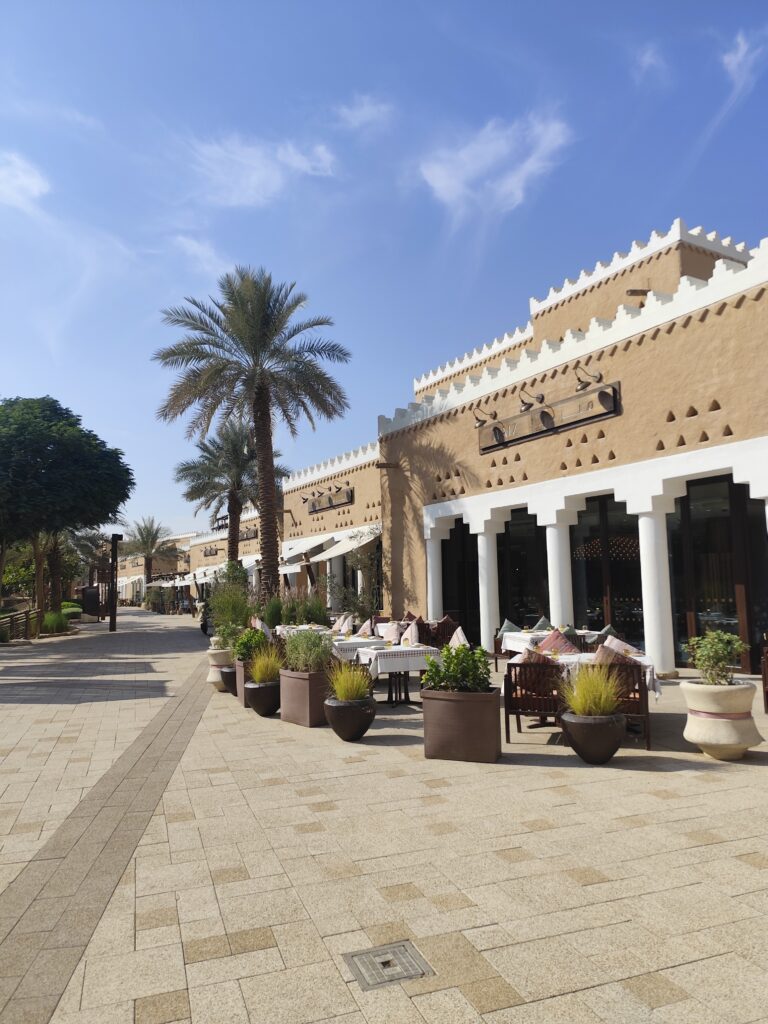
The architecture is classic Najdi: adobe forms, earthy tones, and a layout that makes sense once you are walking it. The atmosphere is calm compared to central Riyadh, and it rarely feels chaotic. Yes, there are tourists, but it is not a crush. You can still move at your own pace.
One detail that improves the experience a lot: use the free audio guide. You can usually access it via a QR code on-site. It helps you follow the story without needing a full guided tour.
Food note: you can eat here, but many restaurants are priced for the location. If value matters to you, treat Diriyah as a cultural visit and eat elsewhere.
National Museum of Saudi Arabia
This is the most useful museum in the city for visitors. It gives structure to what you are seeing in Saudi Arabia: early Arabia, trade routes, archaeology, unification, and the modern state narrative.
It is well-designed and easy to follow. You do not need deep interest in history to enjoy it, because the exhibits are visual and the pacing is good.
Also useful: the museum sits inside a broader cultural complex, so it is one of the few times in Riyadh where you can do a “cluster” of sights without endless driving. The entry is free but check the website to avoid private events.
Murabba Palace
Built in the 1930s for King Abdulaziz, Murabba Palace was among Riyadh’s first buildings to incorporate modern features like electricity and cars.
This is a classic add-on because it is nearby and ties into the same historical period. It is interesting, but it is not as strong as the National Museum.
If you have limited time or museum stamina, do the National Museum and skip this. If you have time and you like royal-history details, add it.
Ushaiger Heritage Village
Roughly two hours northwest of Riyadh, Ushaiger is a beautifully preserved mud-and-brick village. Narrow alleys open into shaded courtyards; wooden doors and palm-trunk beams feel like a time capsule of old Arabia. It’s small, peaceful, and photogenic. Plan for mid-morning or late afternoon when the light turns golden and temperatures soften; those windows are best for photography and lingering in the lanes without the midday heat.
2. Modern City & Entertainment
Kingdom Centre Tower & Sky Bridge
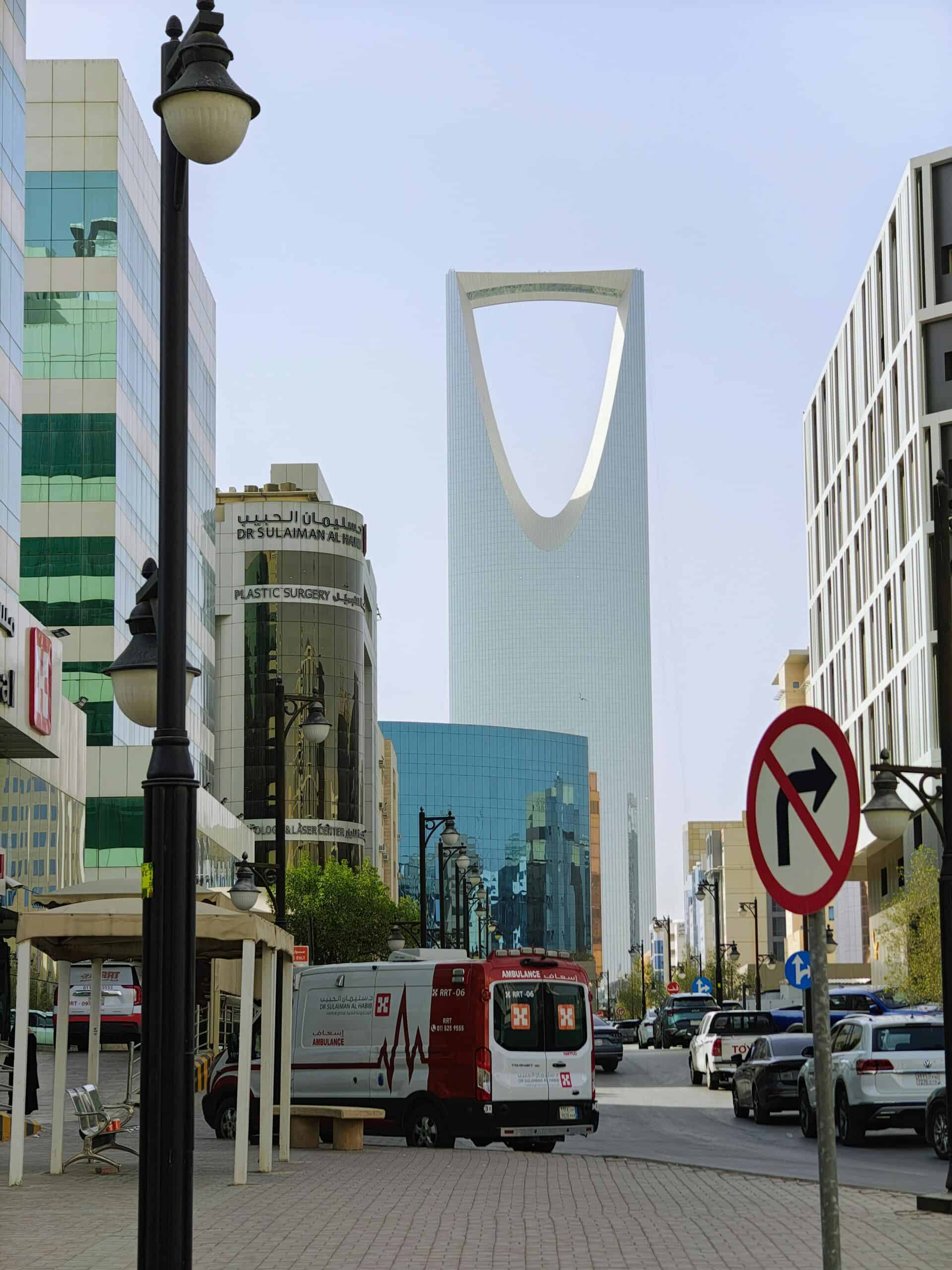
One of Riyadh’s most striking landmarks, this 99-story tower dominates the skyline with its curved “bottle-opener” profile. The Sky Bridge is the cleanest “city view” attraction in Riyadh. Go near sunset if you can. Riyadh’s light is harsh in daytime, and golden hour does a lot of work.
Expect a little friction: entry is through the mall, and parts of the area can be under renovation. There is usually controlled access and you may go up in waves.
It is also one of the more expensive tourist tickets in the city. The honest take: you are paying for the view, not for a deep experience. If you love cityscapes, it is worth it once. If you do not care about views, skip it.
Boulevard Riyadh
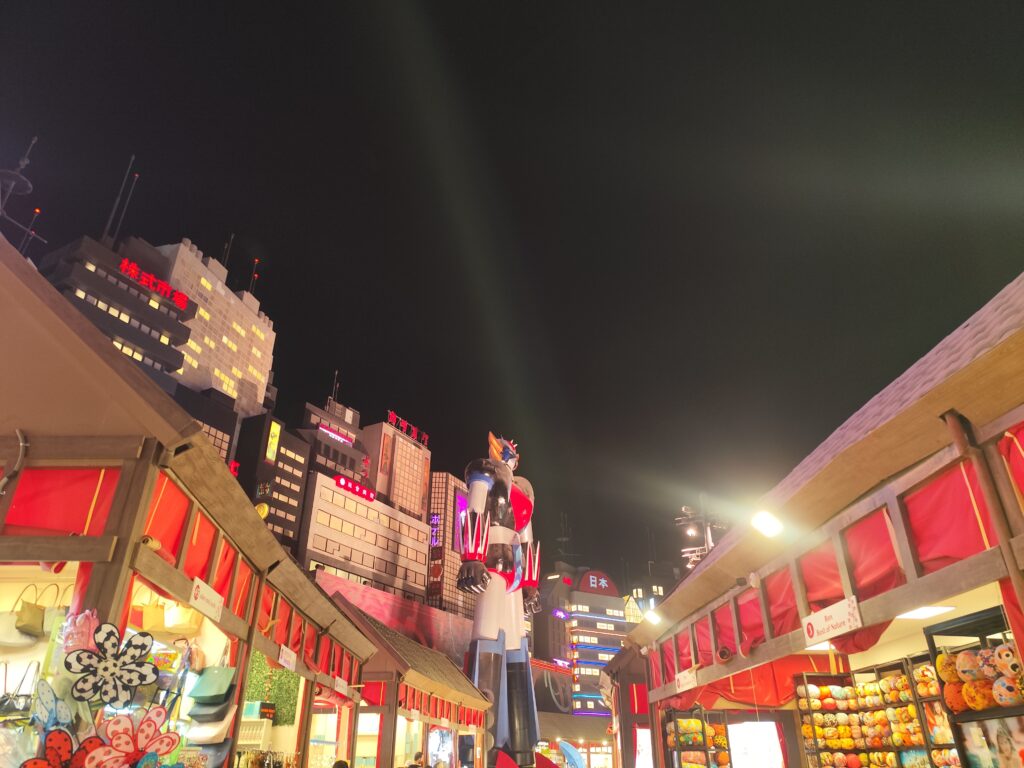
These zones are part of the Riyadh Season ecosystem. They are not “culture” in the traditional sense. They are entertainment districts: lights, crowds, food, and spectacle.
If you only pick one, Boulevard World is usually the better choice than Boulevard City . It tends to feel newer and more visually impressive. Boulevard Riyadh City can still be fun, but it is easier to feel like you are wandering without a point if you go on a quiet night.
This is a night plan. Do not treat it like a daytime sightseeing stop.
Riyadh Season Events
Every autumn and winter, the city turns into a multi-zone cultural festival. One night you might be ice-skating; the next, you’re watching fireworks or browsing food markets. Schedules, venues, and themes change yearly, so the official app is the best way to check what’s on during your dates.
One thing to understand: many events are built with locals in mind. That is not a downside. It is one of the few ways visitors can see Riyadh’s social energy in a real way.
The Zone & U Walk
These trendy open-air areas pack restaurants, specialty coffee spots, and concept stores into walkable promenades. They’re lively, safe, and capture Riyadh’s social side as families and friends linger late into the night. They also work well as dinner bases after a day of museums or desert exploring; look for Saudi-inspired fusion dishes that spotlight local spices or date-based desserts.
3. Parks & Free Urban Spaces
Diplomatic Quarter Parks
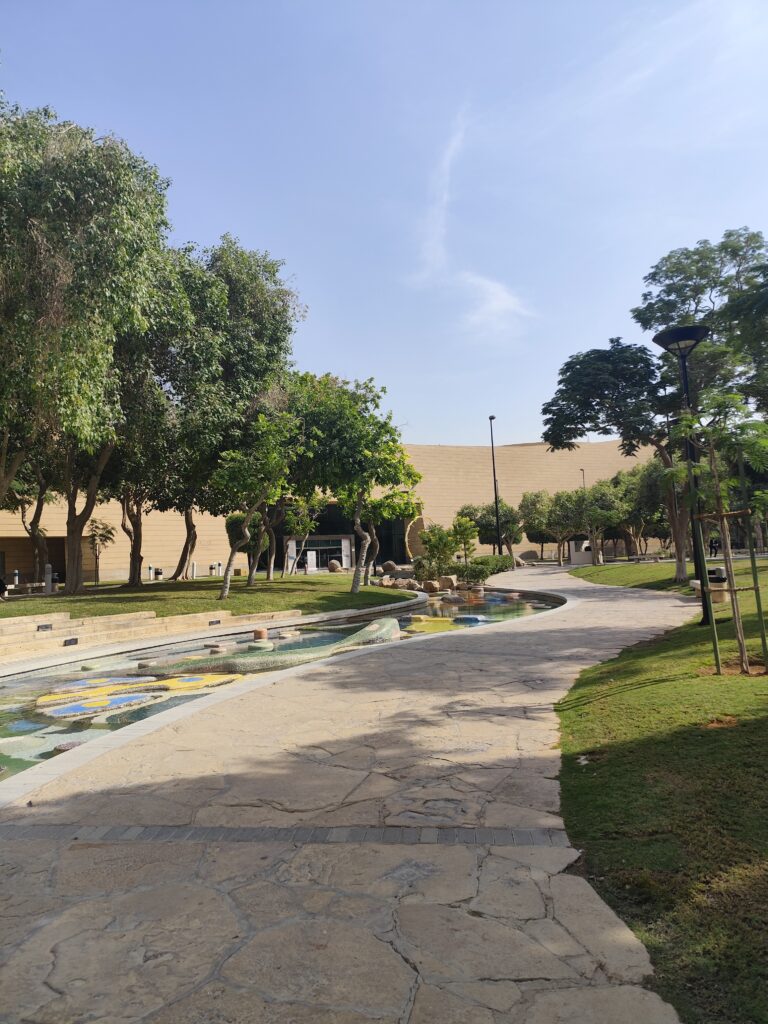
The Diplomatic Quarter extends Riyadh’s greenery with landscaped gardens, sculptural art, and shaded paths that feel far removed from traffic. Locals come for picnics and cycling, especially around Yamamah Park. Late afternoon is ideal: light softens, temperatures dip, and you can move between pockets of shade without rushing. Because many embassies are here, the area feels orderly and quiet — a good reset if your itinerary is heavy on sightseeing.
4. Nature & Day Trips
Edge of the World (Jebel Fihrayn)
About 90 minutes northwest of the city lies one of Saudi Arabia’s most dramatic landscapes. Giant cliffs drop into a plain that seems to run forever, and the silence — broken only by wind — makes the view feel even larger. Reaching the site requires a 4×4 on rough tracks, but the payoff is exceptional; standing on the escarpment truly feels like sitting at the edge of time, and it’s an epic day trip from Riyadh. Pack plenty of water and snacks, wear sturdy shoes for the rocky sections, and plan to stay through sunset when the cliffs glow. If you have a little extra time, the Hidden Cave about ten minutes away adds a short, atmospheric detour. Traveling in a small group is both safer and more enjoyable on the drive.
Red Sand Dunes
Just 50 minutes from the city, the Red Sand Dunes offer a quick hit of desert without committing to a full expedition. Locals rent ATVs, sip tea on carpets, and watch the sunset turn the sand from orange to ember red. Weekends can get busy; arriving early or visiting mid-week gives you quieter slopes and cleaner photo angles. Morning light is especially kind to the dunes’ ripples, so photographers will want to nudge this earlier in the day.
Heet Cave (Ain Heet)
Hidden in limestone hills southeast of Riyadh, Heet Cave shelters an underground lake of startlingly clear blue water. The descent is steep and rocky, so closed shoes and a good flashlight are essential. If you’re not used to scrambling, go with someone experienced; once inside, the light reflecting off the pool makes the cave feel both intimate and otherworldly. It’s a refreshing break from the heat and one of the more adventurous things to do in Riyadh for travelers who like a little challenge.
Rawdat Al Khafs
After winter rains, this desert plain flushes with green grass and wildflowers, turning into a favorite weekend escape for local families. The bloom is short — usually a few weeks between February and March — so checking weather and recent rain makes the difference between a rare meadow moment and a quiet, open-desert drive. Even when it isn’t flowering, the area offers space and silence; if your time is tight, you might prioritize other sights unless you’re set on a scenic picnic.