Is Cairo safe for tourists?
For most visitors staying in established tourist districts, yes. Cairo’s main risks are not violent crime. They are big-city friction: scams, aggressive selling around attractions, traffic, crowds, and petty theft in busy areas.
Cairo safety comes down to three practical factors:
- Where you are at night (busy streets vs quiet backstreets)
- How you move (ride-hailing vs street taxis vs overcrowded transit)
- How you respond to pressure (people testing boundaries is part of the tourist economy)
If you choose the right base, use Uber/Careem, and don’t get pulled into “helpful” conversations, Cairo is manageable.
Safety in Cairo by neighbourhood
Downtown Cairo
Central, chaotic, practical. A strong base if you want walkability and energy.
Why it works
- You are close to major city landmarks and the general “tourist orbit.”
- Lots of hotels/hostels, cafés, restaurants, rooftops, and shops locals actually use.
- The vibe can feel young and creative in parts (specialty coffee, independent places).
Staying here: what to consider
- It’s busy, loud, and visually messy. You need patience.
- Crowds mean more petty-theft risk. Keep your phone and wallet controlled.
- You will still get approached, but it’s often easier to ignore because you’re not isolated.
Best for
- First-timers who want convenience, easy logistics, and don’t need calm.
Zamalek
The lowest-friction base for many travellers. Comfortable, walkable in pockets, and easier at night.
Why it works
- Lots of restaurants, cafés, galleries, and hotels that feel familiar to international visitors.
- A young, middle-to-upper-middle-class neighbourhood with an expat presence.
- Embassies and high-end residences usually mean more security presence and a calmer tone.
Staying here: what to consider
- Traffic can be heavy around dinner hours. Short trips can still take time.
- It’s not “cheap Cairo.” You pay slightly more for comfort.
Best for
- Travellers who want comfort and calm without leaving central Cairo.
Islamic Cairo
Worth visiting. More intense to stay in. The main routes are usually fine, but it can drain you.
Why it works
- Atmosphere: historic lanes, mosques, old-city texture.
- The classic tourist corridor around Khan el-Khalili is busy and “managed” by tourism.
Staying here: what to consider
- It’s a constant sales environment. You will be approached repeatedly.
- Streets can be confusing and labyrinth-like. Getting “lost” increases hassle.
- Deeper local market zones (like Ataba) are not designed for tourists and can feel uncomfortable without local context.
Best for
- A daytime visit (or early evening), not usually the best base for a first trip.
Coptic Cairo
Calm, contained, easy to visit. Less useful as a base.
Why it works
- A clear tourist zone with churches and historic sites.
- Usually calmer than Islamic Cairo.
Staying here: what to consider
- You’ll likely rely on taxis to do the rest of the city.
- It’s more of a half-day visit area than a “live here” area for travellers.
Best for
- A simple, low-stress cultural visit.
Al Doqi (Giza-side by the Nile)
Generally safe and functional, but not very rewarding for tourists.
Why it works
- It’s a real residential/commercial area with services (including hospitals).
- Some Nile-side hotels make it practical.
Staying here: what to consider
- Less atmosphere than Downtown or Zamalek.
- You will take taxis for almost everything: sightseeing, restaurants, and evening plans.
Best for
- People who found a specific hotel deal and plan to move mostly by car.
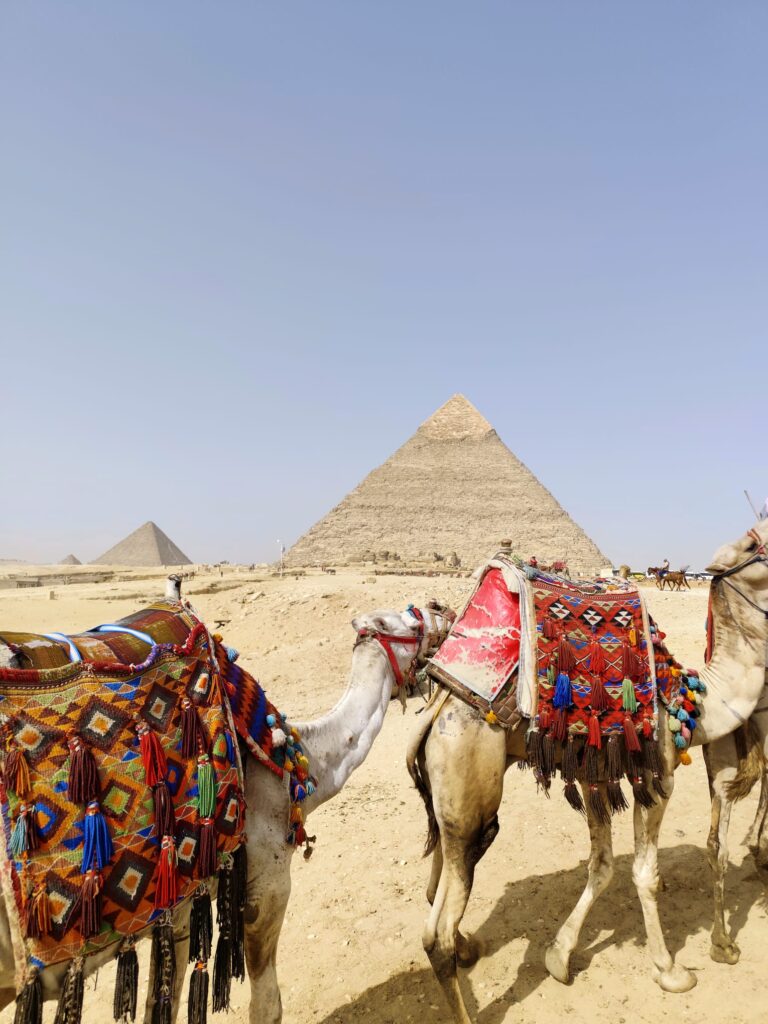
Giza near the pyramids
Beautiful views. More hassle. Often not the easiest base.
Why it works
- Some hotels offer rooftop views of the pyramids at sunrise/sunset.
- If your trip is “pyramids first,” it can feel satisfying.
Staying here: what to consider
- Outside “pyramids time,” the area is less interesting for most visitors.
- More pressure from drivers, vendors, and intermediaries is common.
- Fewer easy, high-quality dining options, and you’re more dependent on transport.
Best for
- Travellers who value the pyramid view enough to accept the trade-offs.
New Cairo
Modern, wealthy, safe-feeling. Poor base for sightseeing.
Why it works
- Cleaner, calmer, and more suburban comfort.
- Popular with wealthier locals and some expats.
Staying here: what to consider
- Far from the historic core and most first-time sights.
- You’ll spend more time (and energy) in traffic.
Best for
- Work trips, visiting friends, or travellers who prioritise suburban comfort over sightseeing efficiency.
Cairo safety tips that actually matter
Keep this simple. Most “Cairo safety” problems are avoidable if you reduce friction:
- Use ride-hailing as your default when you can. It removes a lot of negotiation.
- Don’t walk around looking lost. Plan your route before you step out.
- Expect scams and selling pressure near major sights. Say no once and keep moving.
- At night, stick to areas with normal foot traffic and lighting (especially if you’re new to the city).
If you want the deeper context, these four articles cover the topics Cairo visitors ask about most:
- Is Egypt safe to visit in 2026 (the big picture)
- Solo female travel in Egypt (street pressure + how to handle it)
- Egypt travel safety tips (first-timer practical guide)
- Egypt scams to watch out for (common tactics + how to shut them down)
Where should a first-time tourist stay in Cairo?
If you want the simplest answer: Zamalek or Downtown are the best overall bases for most first-time visitors.
- Choose Zamalek if you want calmer evenings and lower daily friction.
- Choose Downtown if you want maximum central access and you don’t mind chaos.
For most travellers, staying near the pyramids or in New Cairo is only worth it if you have a specific reason. Cairo is easier when your base makes everyday logistics simple.