Morning: Louvre Abu Dhabi
What it is (and why it’s not “the Louvre, but in the UAE”)
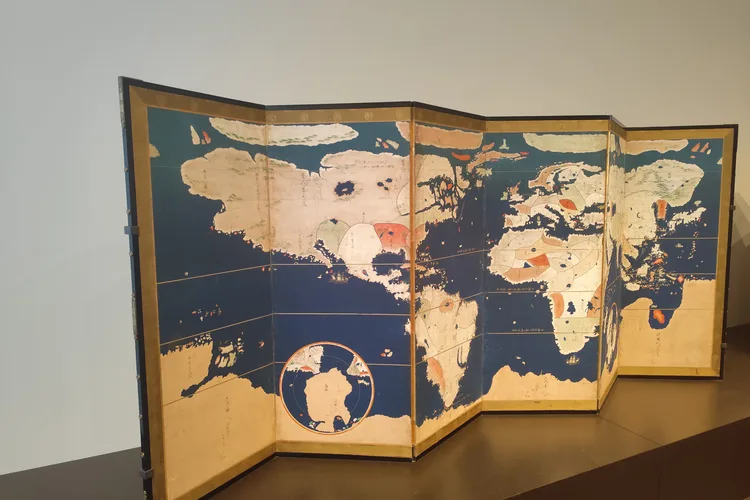
Louvre Abu Dhabi exists because of a cultural partnership between Abu Dhabi and France. The name is licensed and the museum benefits from international cooperation, but it is not a copy of the Louvre in Paris, and it does not feel like one.
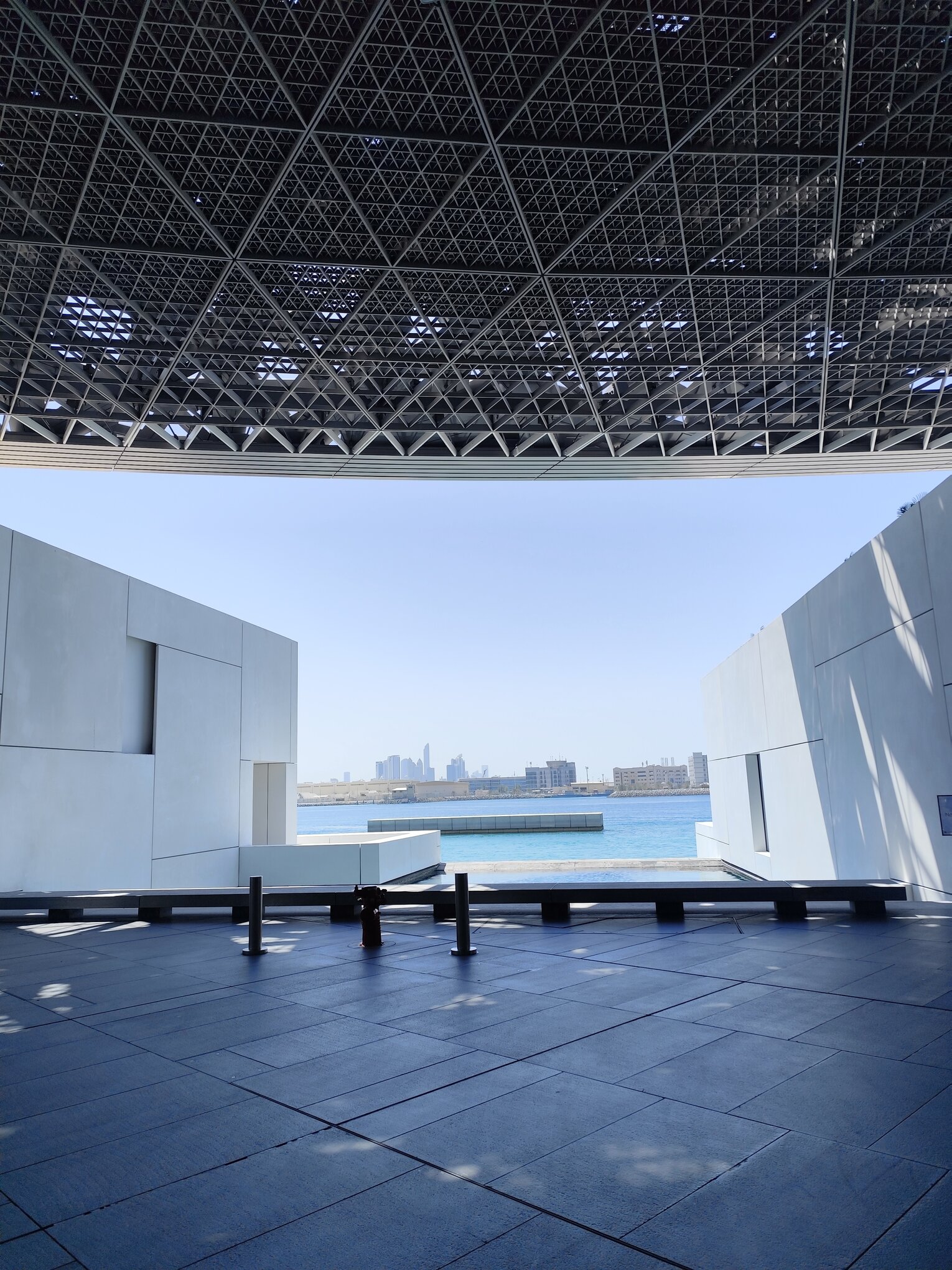
The difference is simple. The Louvre in Paris is a historic palace museum that can feel dense and overwhelming, built around a classic canon and huge crowds. Louvre Abu Dhabi is modern, calmer, and easier to read. The storytelling is broader and more global, with a focus on connections between cultures rather than a single tradition. For many visitors, that makes it the more enjoyable museum experience.
How to plan the visit
Tickets can be bought online or at the entrance. Give yourself a solid block of time so you are not rushing through the galleries, and consider the audio guide if you like context because it makes the collection feel more meaningful rather than just “beautiful objects in quiet rooms.”
Just as importantly, do not treat it as “only a museum.” The architecture and the outdoor spaces are part of why this place works, so after the galleries, walk the courtyards and the waterfront areas and use the café as a proper pause, not a rushed pit stop.
You may also notice turtles in the water around the complex, and there is often staff presence linked to care and feeding. It is a small detail, but it tends to be one of the most memorable moments for families and for anyone who appreciates a calmer, less packaged side of the visit.
Midday: a simple lunch near Saadiyat
Keep lunch easy and close to where you are. Abu Dhabi rewards travelers who protect their time, and on a one-day itinerary, the biggest mistake is wasting energy crossing the city for a restaurant that is “famous” but not actually worth the detour.
Late afternoon to evening: Sheikh Zayed Grand Mosque
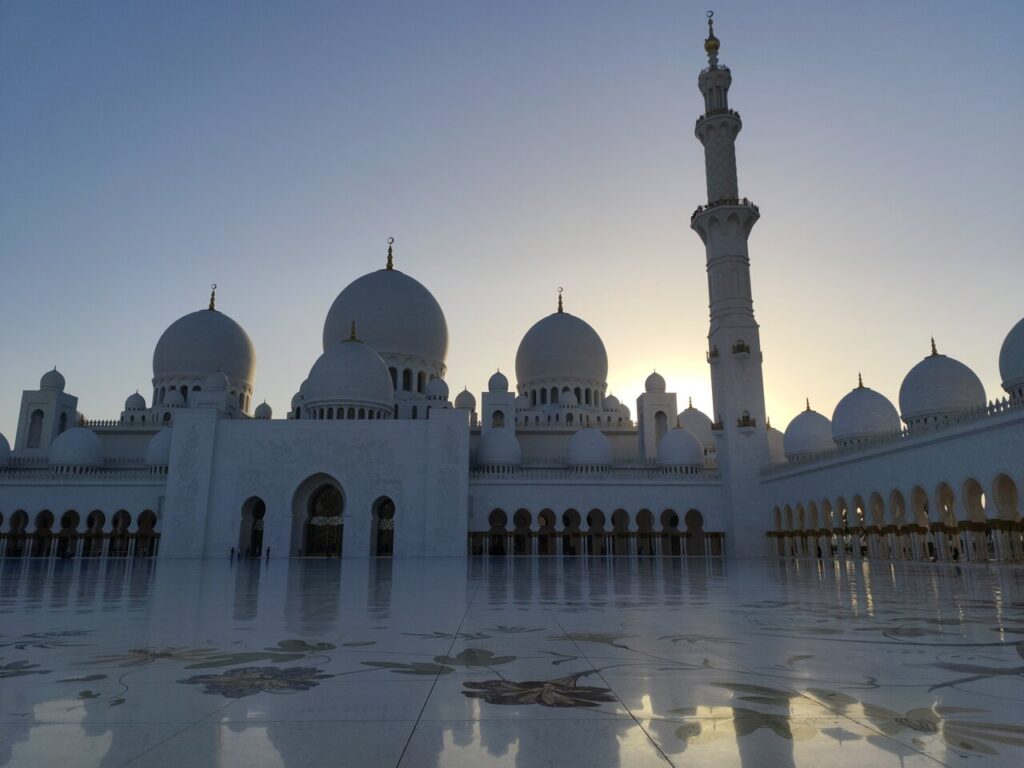
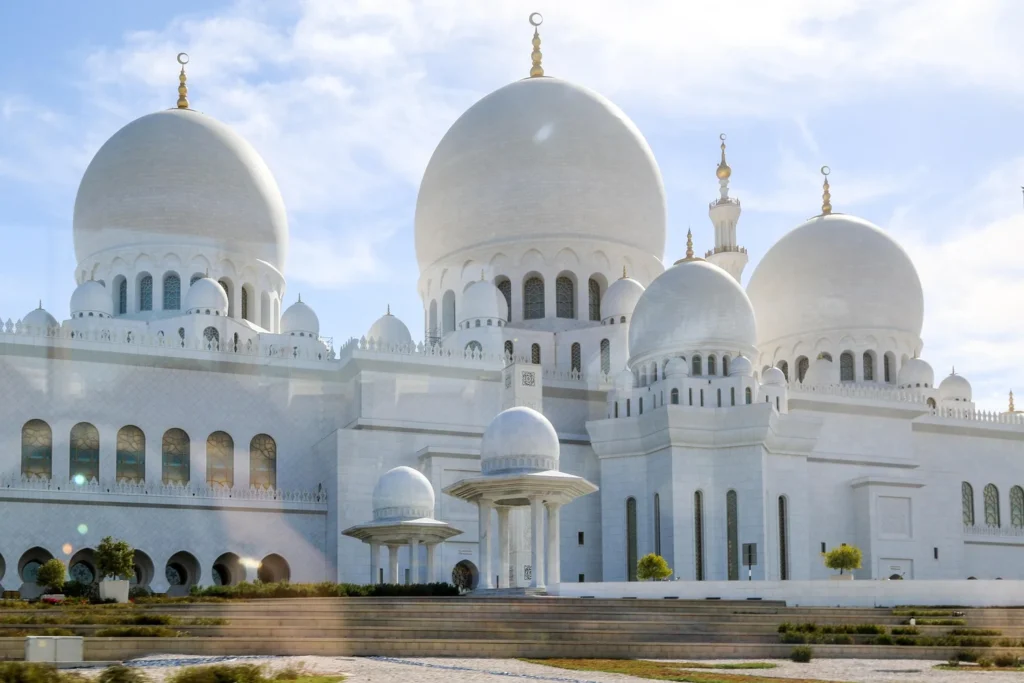
This is the main event. Even travelers who think they are “not mosque people” usually leave impressed, because the scale is enormous and the detail is sharp. Find all the faqs to visit the mosque here.
The best time to go
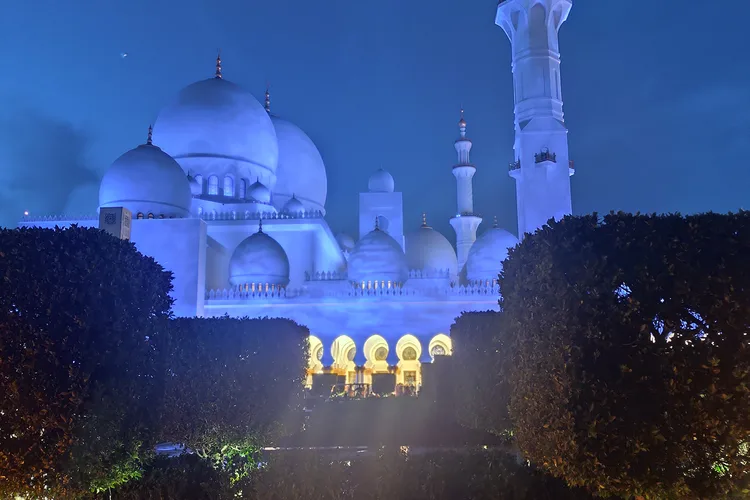
Aim for late afternoon and stay into the evening. You get the mosque in two moods: bright daylight that shows the marble and fine details clearly, and then the softer night lighting that feels more atmospheric. This is why the mosque works best as the final stop of the day.
Dress code (and how to handle it without stress)
Yes, the dress code is modest and you need to be covered, and women need to cover their hair. But you do not need to buy anything at the entrance. You will see shops and stalls selling or renting “traditional outfits,” and many tourists spend money simply because they arrive unprepared and feel pressured. Avoid that: for women, long trousers or a long skirt plus a loose top that covers shoulders and elbows, with a scarf from home for hair covering, is enough; for men, long trousers and a top that covers the shoulders is usually fine.
Arriving dressed correctly also makes the whole visit feel calmer, because you are not negotiating clothing at the last minute.
The free guided tours inside the mosque (do not skip these)
This is genuinely one of the best “value” moments in Abu Dhabi: the mosque runs free guided tours several times a day, and they are often surprisingly empty because most visitors do not wait around for them. If your timing allows, it is worth slowing down and planning your visit around one of these tours. You get clear context about the architecture, the symbolism, and how the mosque functions as a living religious space, which changes the experience completely compared to walking through on your own.
You do not need to book or pay; you normally find signs inside showing the tour times and the exact starting point. When you see the next tour is soon, it is usually worth waiting.
The paid add-on that is actually worth it: the museum inside
The mosque itself is free, but there is a paid museum experience on-site called the Light & Peace Museum. This is one of the rare add-ons I would not dismiss quickly, because it gives you useful context about the mosque and introduces themes around Islam and Islamic civilisation in a clear way. It is also often quieter than the main courtyard areas, so the experience can feel surprisingly focused and pleasant.
If you like meaning more than photos, this is the right place to spend extra time.
Leaving after dark: one practical warning
After night falls, the exit area can get crowded and many people request taxis at the same time. If you have a flight or a fixed plan after the mosque, do not leave your transport to the last minute. Request your taxi or ride-hailing car with buffer, and be conservative with timing if you are heading to the airport.
Bottom line
For 1 day in Abu Dhabi, do not scatter your energy. Start with Louvre Abu Dhabi while you are fresh, then finish at Sheikh Zayed Grand Mosque in late afternoon and evening, when it looks its best and feels most complete. Bring modest clothing and a scarf from home, skip the entrance outfit shopping, and try to catch one of the mosque’s free guided tours because they add real value with almost no downside. If you want even more context, the Light & Peace Museum is the extra I would actually consider. This is a clean day with two strong stops and no filler.