Day 1: Louvre in the morning, Grand Mosque in the evening
Morning: Louvre Abu Dhabi
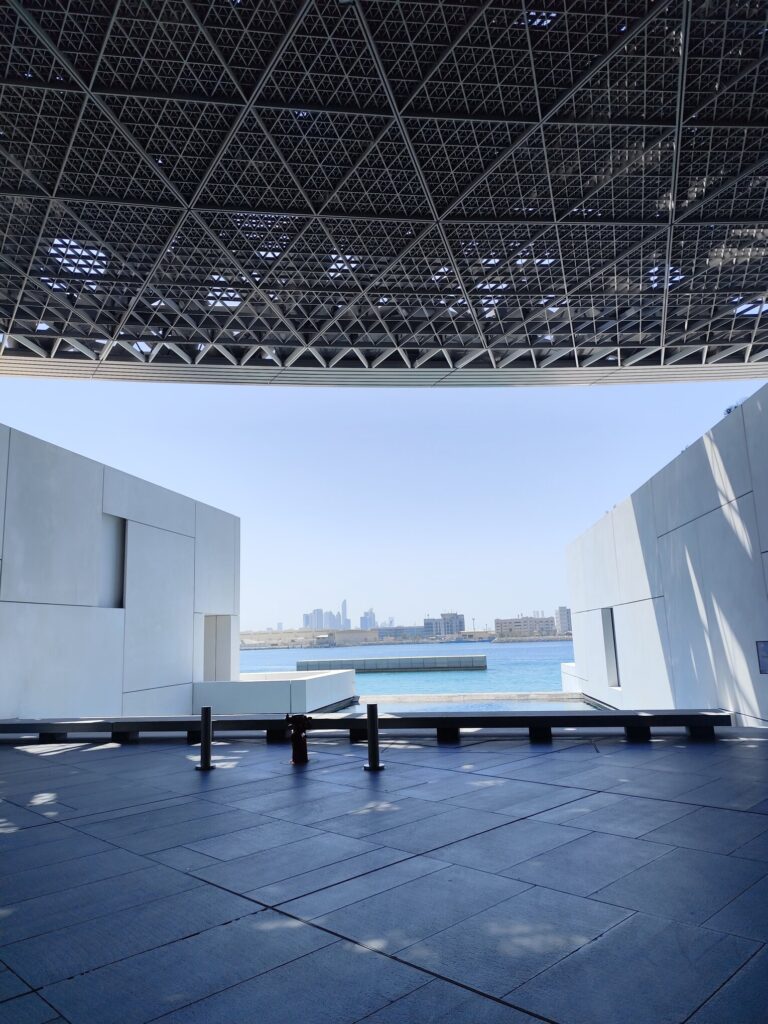
Start with Louvre Abu Dhabi while you are fresh. It is a calm, modern museum that feels easier than the Louvre in Paris: less overwhelming, better flow, and more curated storytelling. Buy tickets online or at the entrance, then give yourself enough time to move slowly and actually read the context rather than speed-walking the galleries.
If you only do the indoor rooms, you miss part of what makes it worth the trip. The architecture and waterfront setting matter here, so plan for a proper walk around the complex after the galleries. The café is also useful as a mid-morning break, not as a rushed stop.
Midday: simple lunch, close to where you are
For a two-day itinerary, you do not need to “earn” lunch with a long taxi ride. Keep it near Saadiyat or along your route. Abu Dhabi distances add up quickly, and your evening stop deserves your energy.
Late afternoon into evening: Sheikh Zayed Grand Mosque
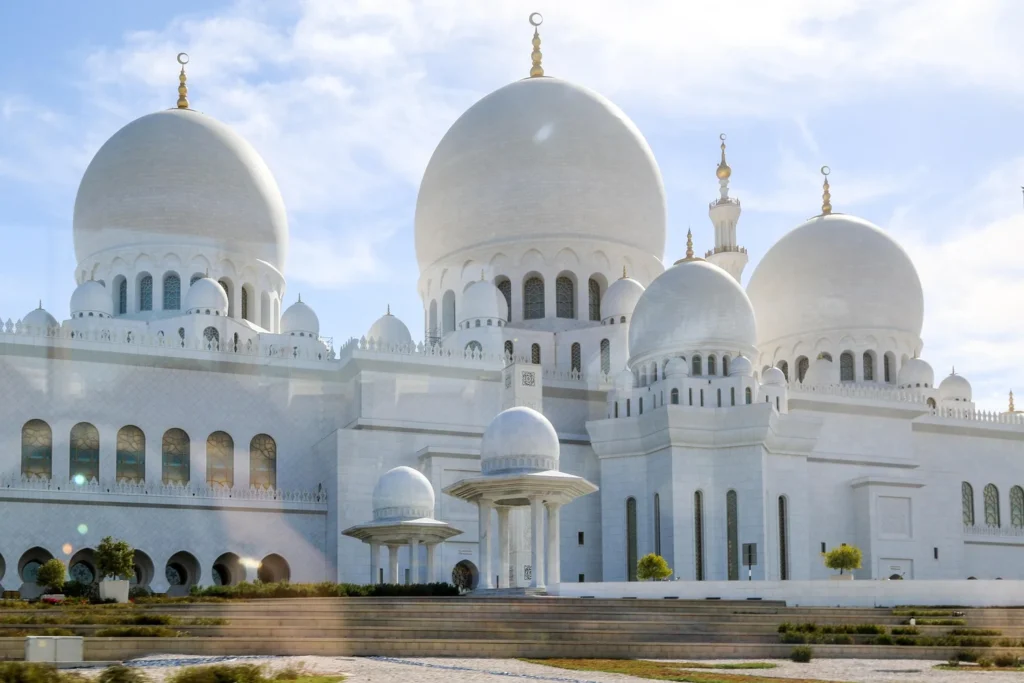
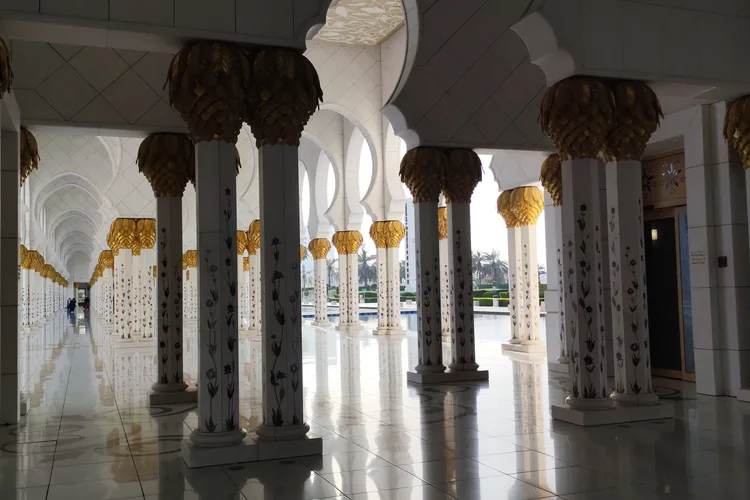
Finish Day 1 at Sheikh Zayed Grand Mosque. Late afternoon is the best window because you see it in daylight first, then you get the shift into evening lighting, which changes the entire atmosphere. This is the kind of place that feels dramatically better when you stay long enough to see the light change.
Dress code is modest, and women need hair covered. The key practical tip is simple: bring your own long trousers (or long skirt), a loose top that covers shoulders and elbows, and a scarf from home for hair covering, so you do not get pulled into buying “mosque outfits” at the entrance.
Inside the mosque, look for the free guided tours that run several times a day. They are often surprisingly empty because most visitors do not wait around. If the next tour is soon, it is usually worth slowing down and joining because it adds real context and makes the visit feel less like a photo session and more like a place you understood.
If you want even more context, the on-site Light & Peace Museum is the paid extra that can be genuinely worth it. It tends to be calmer than the main courtyard areas and gives you a clearer picture of the mosque’s story and the wider themes it represents.
One last practical warning: after dark, the exit area can get crowded and taxis can become annoying to secure quickly. If you have plans afterwards, request your ride with buffer rather than waiting until you are already ready to leave.
Day 2: Qasr Al Watan, Observation Deck at 300, then Corniche Beach
Day 2 works best if you keep it geographically tight. Everything here sits around the Corniche / Ras Al Akhdar area, so you get more time experiencing the city and less time sitting in traffic.
Morning to early afternoon: Qasr Al Watan (Presidential Palace)
Qasr Al Watan is one of Abu Dhabi’s most impressive interiors. It is not a “royal home tour.” It is a working presidential palace that also opens to visitors, and the experience is built around architecture, national story, and soft power rather than personal history.
Plan to spend several hours here. This is not the kind of place you rush in 45 minutes. The scale is part of the impact, and the rooms are designed for slow movement and detail.
Tickets can be purchased online, and there are also ticket options for tours depending on how you prefer to visit. If you like structure, guided tours are available and can be a better experience than wandering without context, especially on a first visit. If you prefer independence, Qasr Al Watan also promotes an audio-guided visit (available in multiple languages), which is a good middle ground between “no info” and “full tour.”
Two small things that make the visit smoother: download the official map PDF to your phone before you arrive, and bring comfortable shoes. The palace itself encourages a contactless visit, and the map download is there for exactly that reason.
Now, the “extra” experiences: Qasr Al Watan often runs ceremonial performances that are worth catching if your timing lines up. There is a Horse Marshal display on the grounds and a Military Music Show on select days; both are easy to miss if you do not know they exist, so check the official schedule when you are planning your day. Many visitors also stay for the evening projection show, Palace in Motion, which is part of the classic Qasr Al Watan experience when it is running.
(As always: do not plan around exact times you saw in an old blog post. These performances can shift by season and event periods.)
Late afternoon: Observation Deck at 300 (sunset plan)
After Qasr Al Watan, go to Observation Deck at 300 for late afternoon into sunset. It is inside the Conrad Abu Dhabi Etihad Towers, on a high floor, and the view is the point: skyline plus a long sweep of sea that looks especially good as the light drops.
This is one of those “yes, it’s expensive for a view” places, but it becomes easier to justify because the ticket typically includes a food-and-beverage credit to use at the lounge. Buy your ticket online if you want less friction on arrival.
If you can, stay long enough to see the change in light. Abu Dhabi’s skyline is not the most dramatic in the region, but the coastline and water make this view feel calm and spacious, especially near sunset.
Evening option: Corniche Beach for a walk and an easy dinner
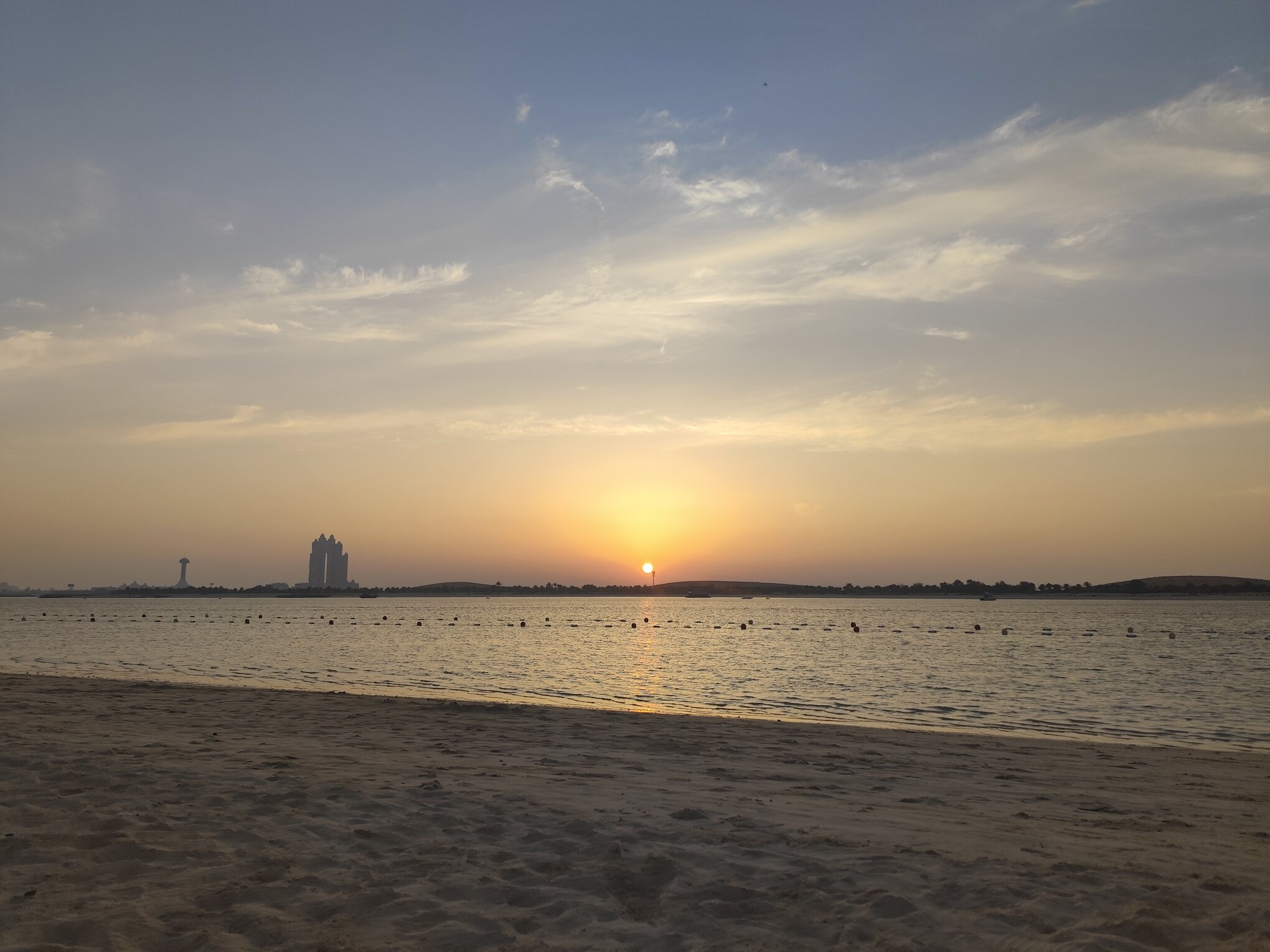
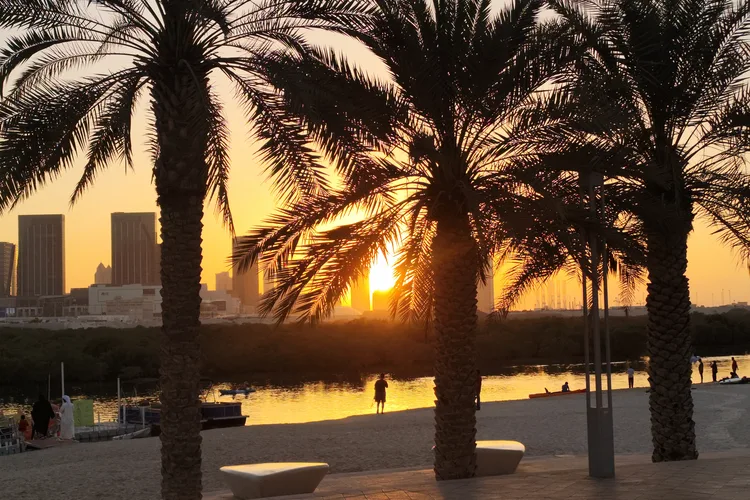
If you still have energy, finish with a walk at Corniche Beach / Corniche Road, which runs along the city’s waterfront and sits close to Etihad Towers. It is an easy, low-effort way to end the day, and you will find plenty of cafés and restaurants nearby without needing another “destination” booking.
The bottom line
For 2 days in Abu Dhabi, keep Day 1 focused on the city’s two strongest first-timer sights: Louvre Abu Dhabi in the morning and Sheikh Zayed Grand Mosque late afternoon into evening, ideally timed around one of the mosque’s free guided tours. Day 2 stays on the Corniche side for a cleaner, less stressful day: Qasr Al Watan with an audio guide and downloaded map, then Observation Deck at 300 for sunset, and Corniche Beach if you want a relaxed finish.